


Robotic Solar Panel Cleaning Found to Accelerate Anti-Soiling Coating Wear Under Dusty Conditions
 03 September 2026 04:45 PM
Summary: A new study on robotic solar panel cleaning shows that dust—not the cleaning robot itself—is the biggest factor reducing the lifespan of anti-soiling coatings, with some coatings degrading up to 82 times faster under dusty conditions.
Researchers at the Indian Institute of Technology Bombay have revealed a critical challenge for automated solar panel maintenance: dust accumulation can dramatically shorten the lifespan of anti-soiling coatings during robotic cleaning operations.
The study examined four commercial hydrophobic coatings commonly used on photovoltaic (PV) modules to reduce dust buildup and maintain solar energy output. Using an accelerated indoor testing platform that simulated real-world environmental conditions, the team evaluated how robotic brush cleaning, dust exposure, dew formation, and operating parameters affect coating durability.
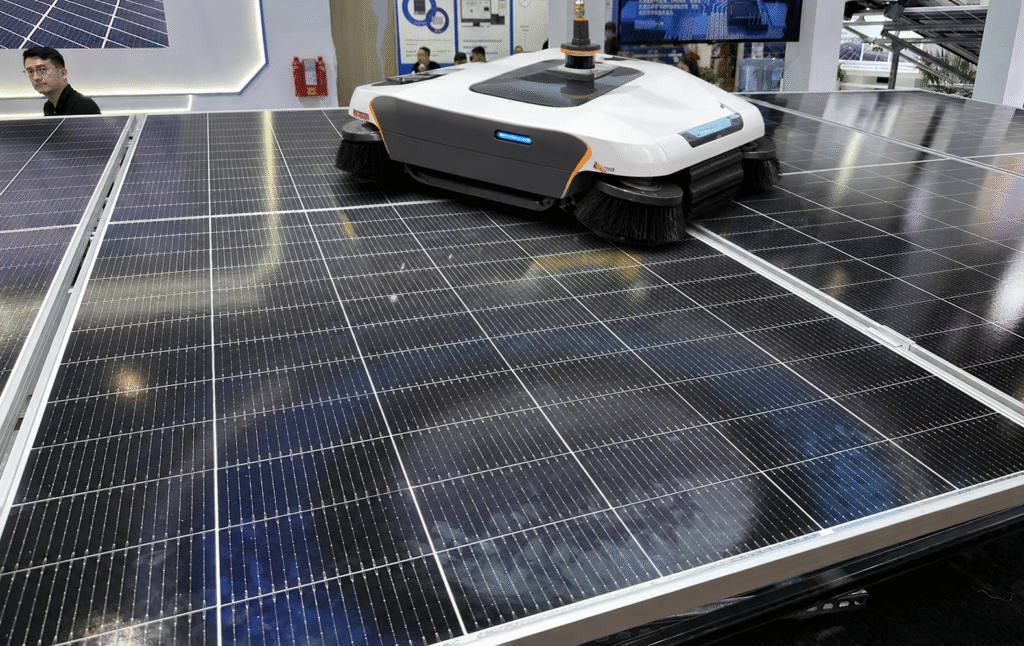
Results showed that dust was the dominant factor driving coating degradation. When dust was present during robotic cleaning, coating lifetime dropped to roughly one eighty-second of that observed during dust-free cleaning cycles. Researchers also found that harder brush materials, slower cleaning speeds, and brush rotation in the direction of travel significantly increased abrasion damage.
One coating tested was completely removed after repeated cleaning cycles, while all coatings experienced measurable declines in water-repellent performance. The study also found that cleaning brushes themselves suffered mechanical and chemical wear over time, highlighting the challenges faced by autonomous solar maintenance systems operating in harsh environments.
The findings are particularly relevant as robotic cleaning technologies become increasingly important for utility-scale solar farms in arid regions where water conservation is a priority. Waterless robotic cleaning systems are widely adopted to maintain solar panel efficiency, but excessive abrasion can reduce the effectiveness of protective coatings designed to limit soiling losses.
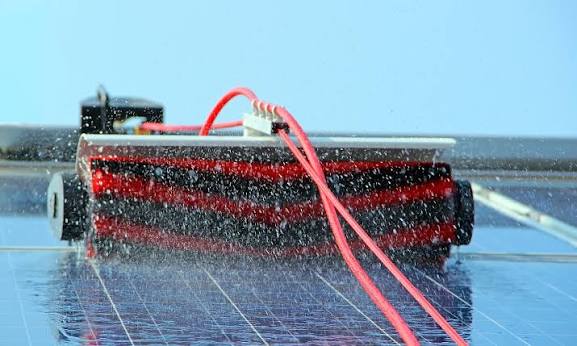
To improve coating longevity, the researchers recommend optimizing cleaning schedules to prevent heavy dust accumulation, using softer brush materials such as microfiber-based designs, avoiding brush rotation toward the direction of travel, and maintaining higher cleaning speeds to reduce brush-surface contact time.
The research provides valuable guidance for the design of next-generation robotic solar panel cleaning systems and anti-soiling coating technologies, supporting higher photovoltaic performance, lower maintenance costs, and improved long-term reliability for large-scale solar energy installations.