


MOFU Robot Uses Shape-Shifting Motion to Appear More Alive, Study Finds
 09 September 2026 06:01 PM
Summary: Researchers in Japan have developed a fluffy shape-changing robot called MOFU and found that whole-body expansion and contraction can significantly increase how lifelike people perceive a robot to be.
As social robots become increasingly important in healthcare, elder care, and human-centered environments, researchers are exploring new ways to make machines feel more natural and engaging. A team from the University of Electro-Communications (UEC) in Japan, together with Sony Corporation, has introduced MOFU (MOrphing Fluffy Unit), a soft mobile robot capable of expanding and contracting its entire body to enhance perceived animacy.
Published in PLOS ONE, the study investigated whether whole-body volume change—a movement commonly seen in living organisms such as breathing, courtship displays, and defensive behaviors—can make robots appear more lifelike.
Unlike conventional robots that rely on articulated joints or limb movements, MOFU uses a Jitterbug geometric transformation mechanism that allows its spherical body to change size. A single motor expands the robot’s height from approximately 210 mm to 280 mm, while a differential two-wheel system enables movement and rotation. The robot is covered in a soft fluffy material and designed for quiet operation, making it suitable for close human interaction.
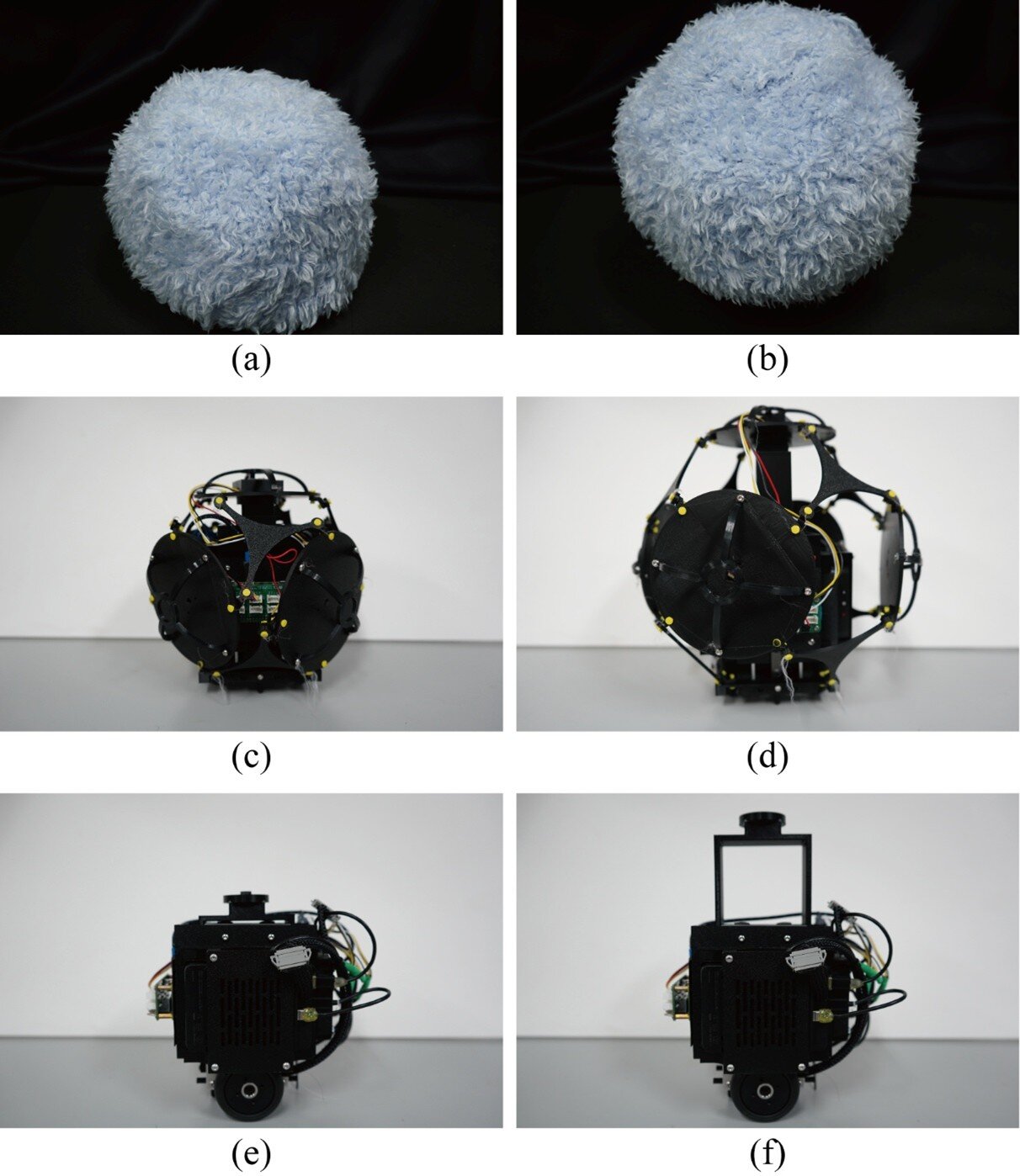
To evaluate human reactions, researchers conducted three online experiments involving 498 participants. Volunteers watched short videos of MOFU performing different motions, including expansion-contraction, rotation, and locomotion, before rating the robot using the widely used Godspeed Animacy Scale.
The results showed that both expansion-contraction motion and rotational movement significantly increased perceived animacy compared with a stationary robot. When shape-changing motion was combined with locomotion, participants rated MOFU as even more lifelike.
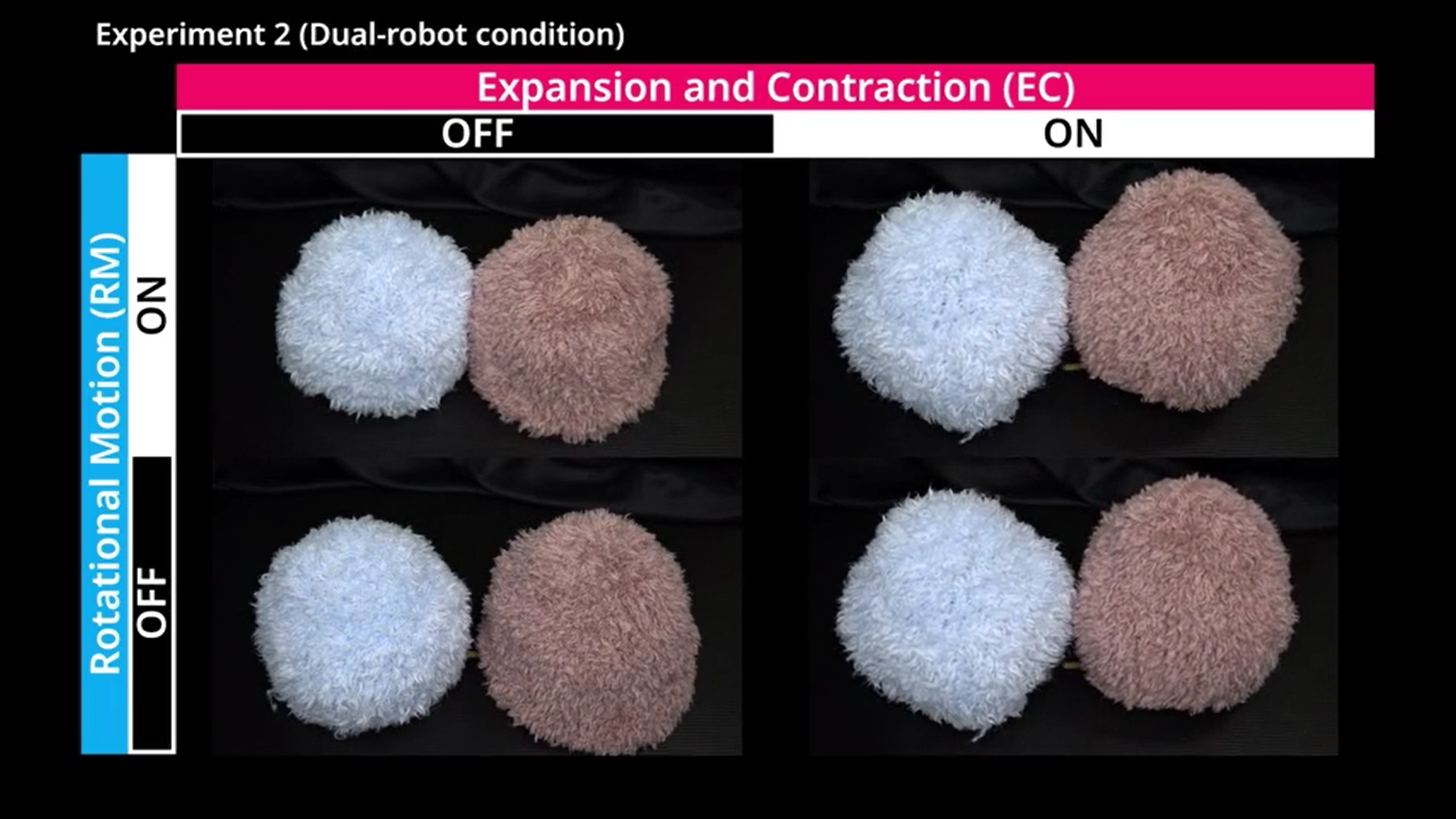
Researchers believe the findings highlight a new design direction for social robotics, human-robot interaction (HRI), healthcare robots, companion robots, and assistive technologies. Future studies will examine how factors such as movement speed, expansion amplitude, touch, and sound influence user perception.
The team suggests that integrating volumetric motion into robot design could create more intuitive and expressive interactions, particularly in healthcare and welfare settings where quiet, approachable robots are highly valued.