


Fraunhofer ISE Boosts Battery Energy Density 10–15% with Thicker Electrodes
 16 September 2026 06:08 PM
Summary:Fraunhofer ISE and partners have redesigned battery electrodes to store 10–15% more energy at the same weight by tripling coating thickness and reducing current collectors.
Researchers at Fraunhofer Institute for Solar Energy Systems ISE, with research and industry partners, have modified battery electrode architecture to increase energy density by 10–15% at the same weight. They increased electrode coating thickness from the standard 100–200 micrometers to up to 800 micrometers, cutting the number of current collectors and freeing more space for active material.
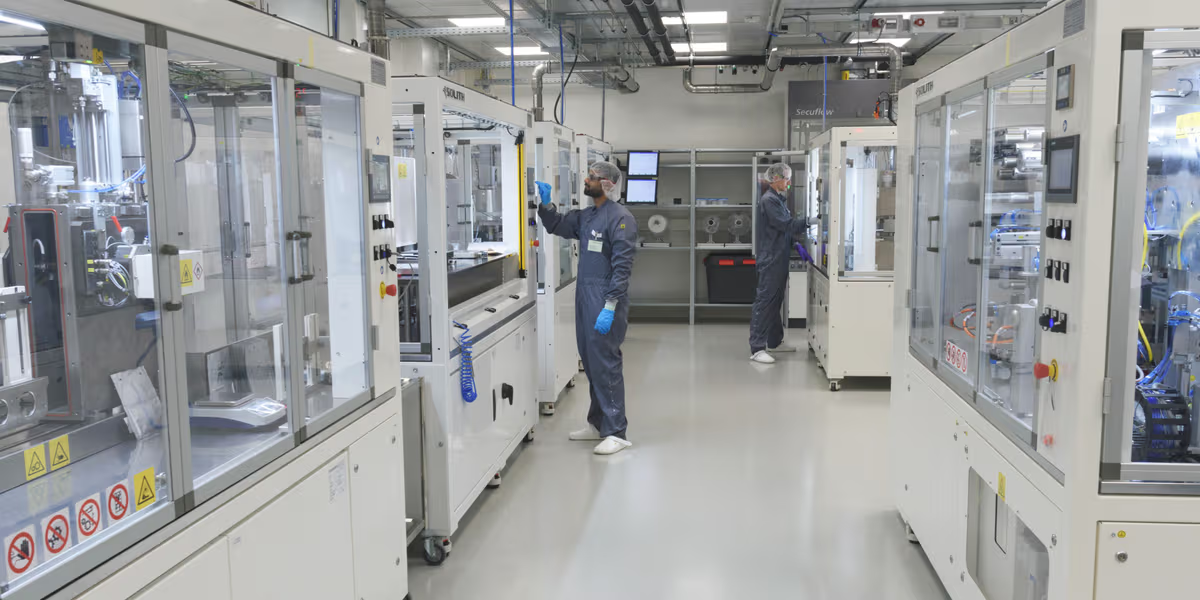
The concept was validated in small lab cells for lithium-ion, sodium-ion, and zinc-ion batteries. For lithium-ion, pouch cell prototypes were produced on a semi-automated line in a cleanroom. The team says the cell concept can adapt to other chemistries.
The electrodes are PFAS-free and made without toxic solvents. The design targets future mass production: a potential electrode line would have lower process complexity than state-of-the-art wet coating, reducing capital and operating costs. This could help small and medium-sized enterprises build battery cell production in Germany, especially for stationary storage.
The work was part of the VORAN, INFAB, and WinZIB2 projects, funded by public ministries. The team calls it a promising step toward industrializing the novel electrode and cell architecture.