


MIT AI-Powered Flying Robot Achieves Insect-Like Agility With 10 Midair Flips
 23 September 2026 04:35 PM
Summary: MIT researchers have developed an AI-controlled insect-scale flying robot that performs complex aerial maneuvers with speed and agility approaching that of real insects.
Researchers at the Massachusetts Institute of Technology (MIT) have unveiled a major breakthrough in microrobotics, creating an AI-powered flying robot capable of performing rapid aerial flips and aggressive maneuvers previously difficult for insect-scale machines. The work, published in Science Advances, could accelerate the development of tiny autonomous robots for search and rescue, environmental monitoring, and industrial inspection.
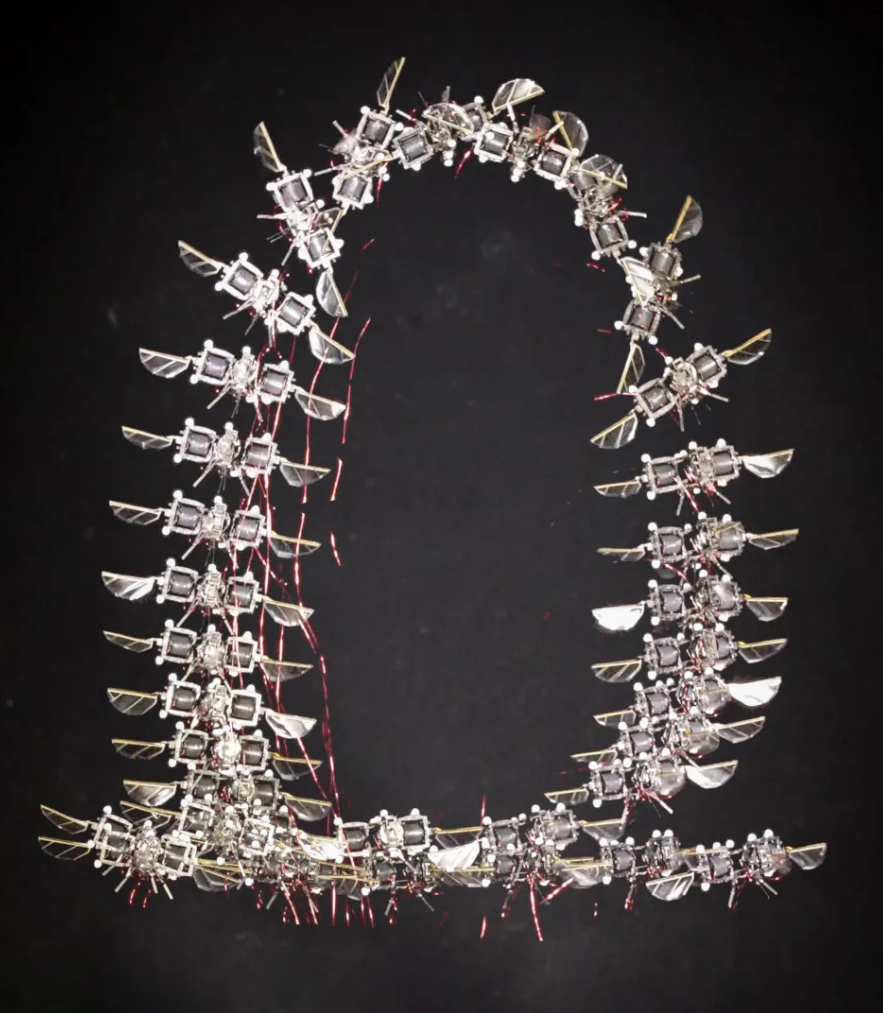
The insect-inspired robot is roughly the size of a microcassette and weighs less than a paperclip. Powered by soft artificial muscles and flapping wings, it combines lightweight hardware with a newly developed AI flight control system that dramatically improves performance.
The research team introduced a two-stage control framework that combines a sophisticated model-predictive controller with a deep-learning policy trained through imitation learning. This approach enables the robot to make real-time flight decisions while maintaining stability during highly dynamic movements.
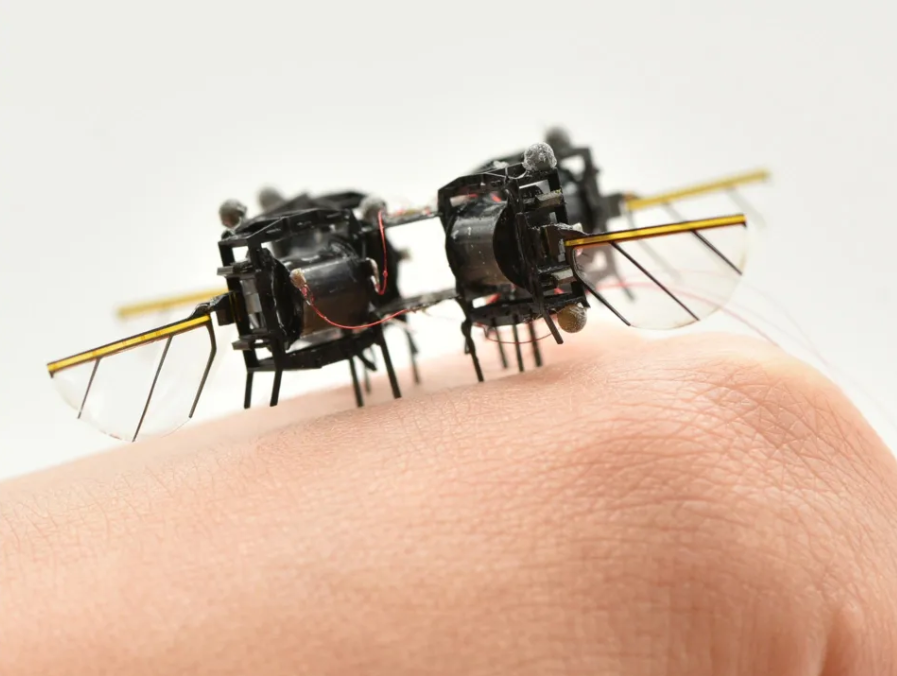
Testing showed impressive results. Compared with previous generations, the robot achieved a 447% increase in flight speed and a 255% improvement in acceleration. It successfully completed 10 consecutive somersaults in just 11 seconds, while remaining within a few centimeters of its planned trajectory despite external disturbances.
The researchers also demonstrated insect-like saccade maneuvers, rapid body rotations used by insects for navigation and visual stabilization. Future versions may carry miniature cameras and sensors, enabling autonomous operation in complex environments such as collapsed buildings or confined industrial spaces.
Advances in AI robotics, autonomous drones, flying microrobots, bioinspired robots, and search-and-rescue technology continue to push the boundaries of what miniature machines can achieve. As researchers move toward fully autonomous robotic insect swarms, these systems could become valuable tools for real-world missions where larger drones cannot operate.
For more technology and innovation updates, visit https://eriksen.co.th/