

Product Description

Can your mask really protect you?
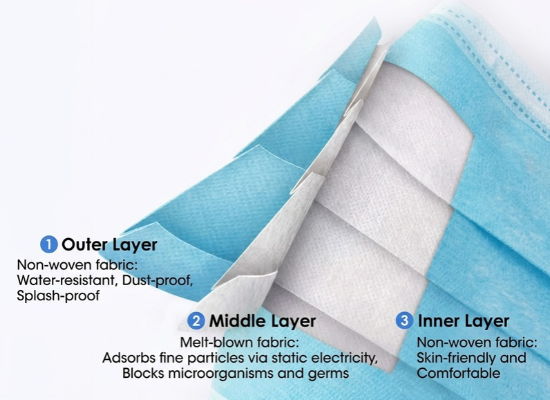
Is wearing a mask containing
melt-blown fabric enough?
If the melt-blown fabric has no static electricity,
you are still running naked (completely unprotected).
Electrostatic adsorption
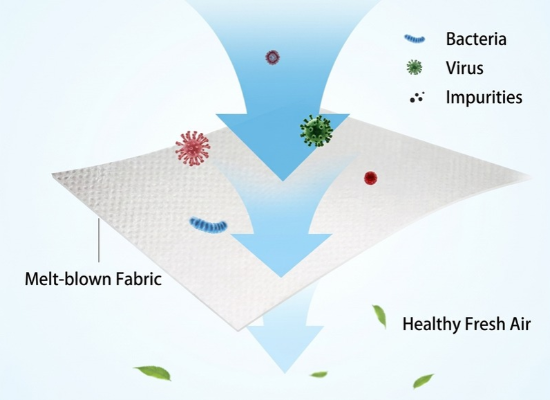
by the melt-blown fabric is the core
The middle layer of medical and N95 masks is melt-blown fabric, which carries high-voltage static electricity. By utilizing the principle of electrostatic adsorption, it can effectively prevent viruses as small as 0.1 microns (one-ten-thousandth of a millimeter) from penetrating the mask and entering the human body.
How to test if a mask
has static electricity?
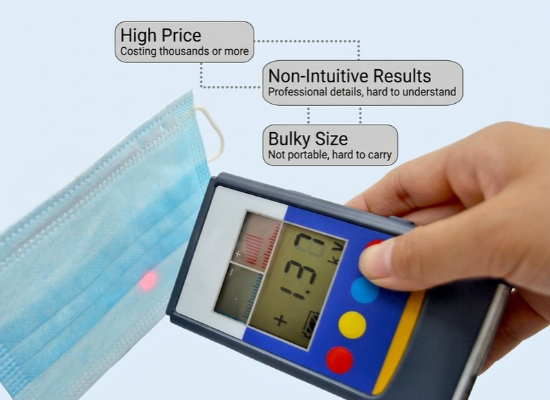
Industrial electrostatic testing instruments
are impractical for everyday use.
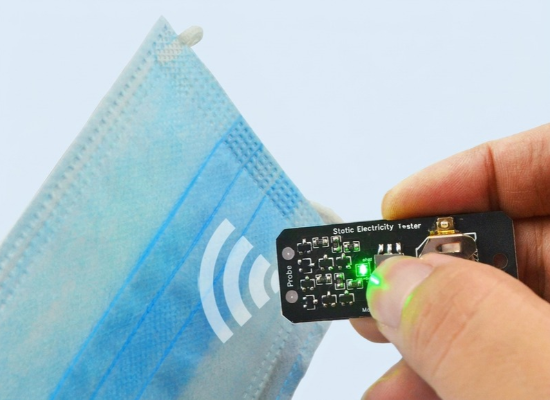
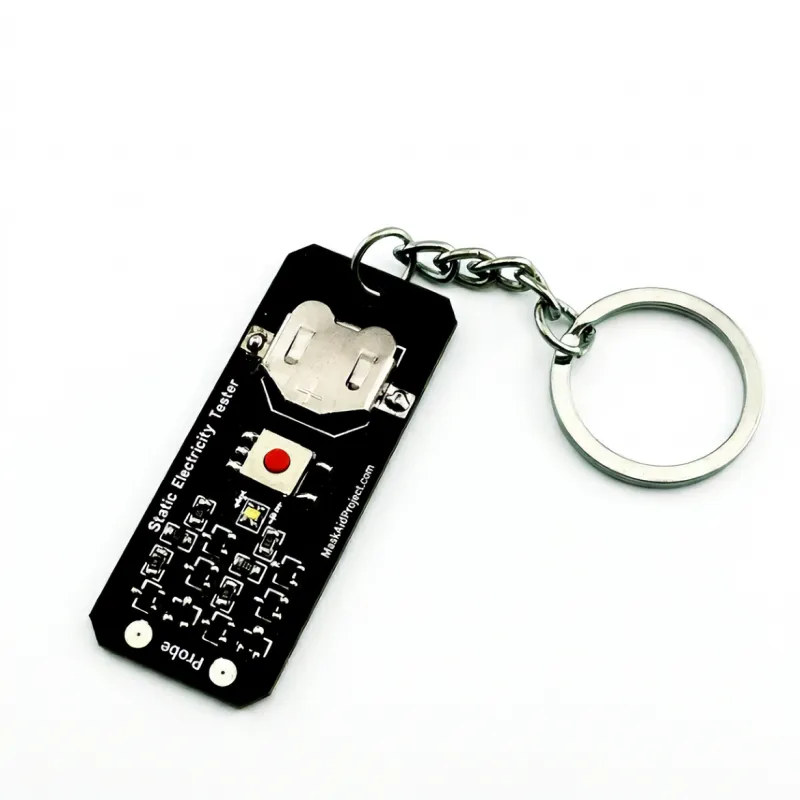
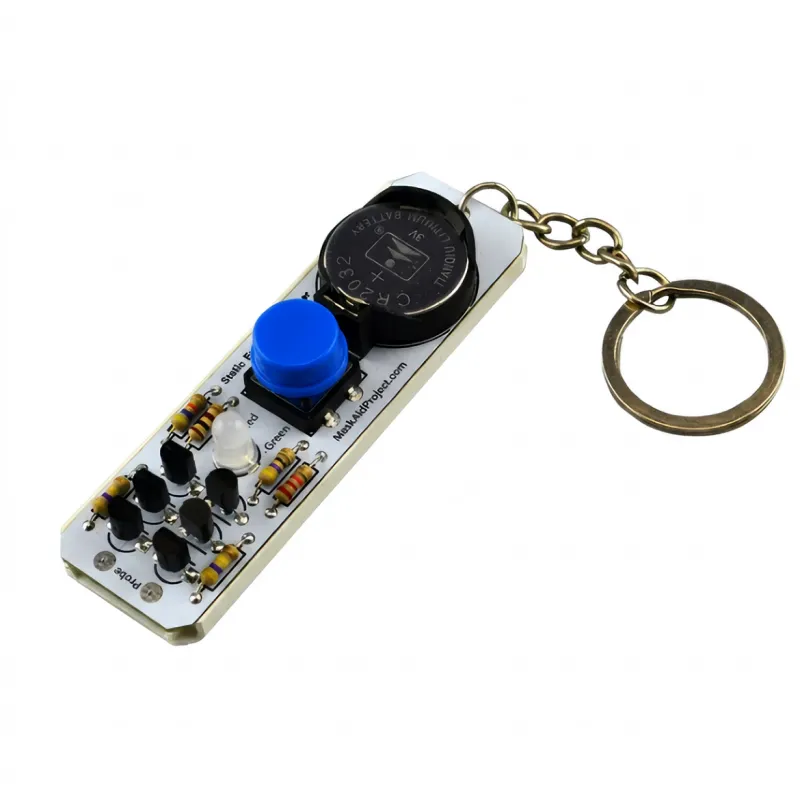
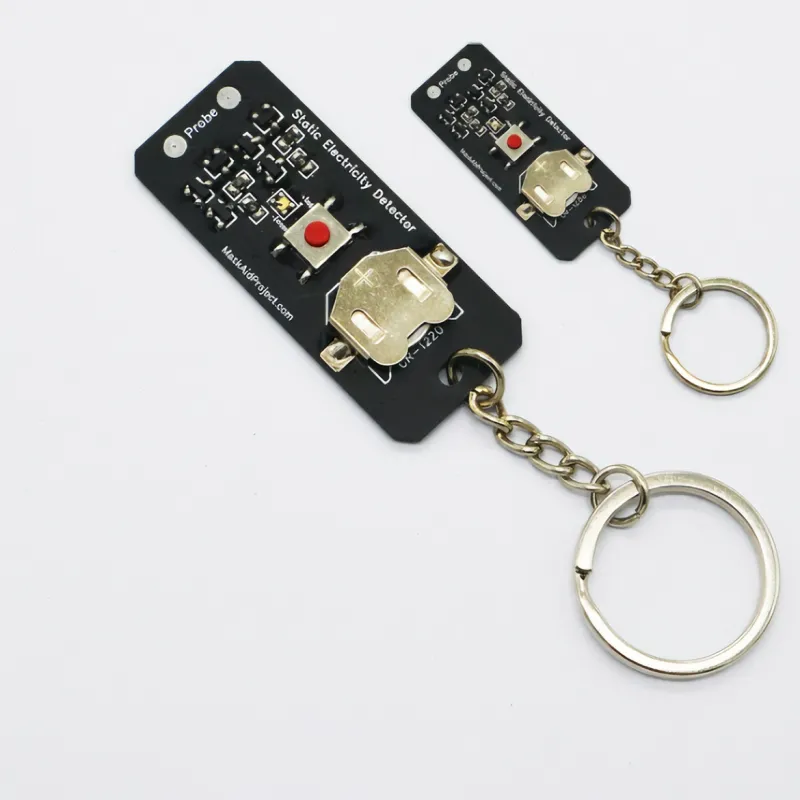
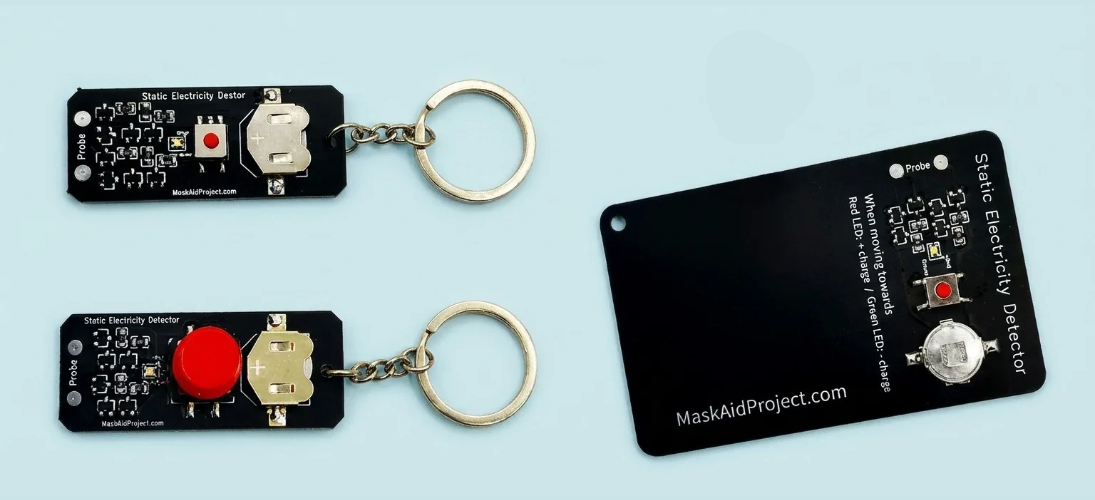
Mini Mask Electrostatic Detector
Helping you wear masks with guaranteed protection.
Product parameters
PARTS LIST | |||||
No. | Category | Name | Specifications | Quantity | Remarks |
1 | Power Supply | Battery Holder | CR-2032 Coin Cell Battery Holder | 1 | Battery Clip |
2 | Battery | CR-2032 Coin Cell Battery | 1 | Power Source | |
3 | Switch | Push Button Switch 12*12*7.3 DIP | 1 | Power Switch | |
4 | Button Cap | Push Button Switch Cap 12*12*7.3 | 1 | Switch Button | |
5 | Semiconductor | LED | 5mm Red-Green Dual Color LED | 1 | Indicator Light |
6 | NPN Transistor | 9014 Transistor DIP | 5 | Signal Amplification | |
7 | PNP Transistor | 9015 Transistor DIP | 1 | Signal Amplification | |
8 | Carbon Film Color Ring Resistor | 1 | Electronic Component | ||
9 | Carbon Film Color Ring Resistor | 1 | Electronic Component | ||
10 | Carbon Film Color Ring Resistor | 1 | Electronic Component | ||
11 | Carbon Film Color Ring Resistor | 1 | Electronic Component | ||
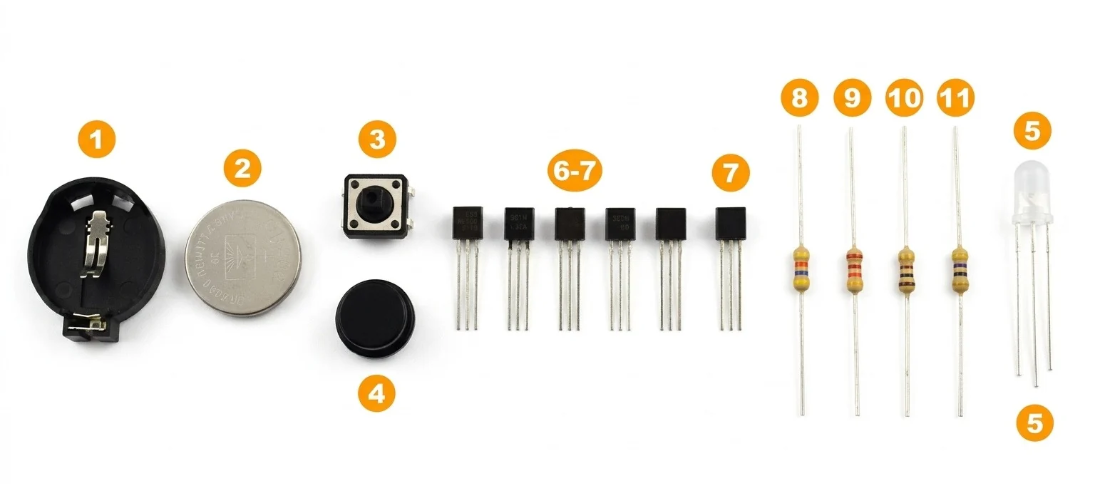
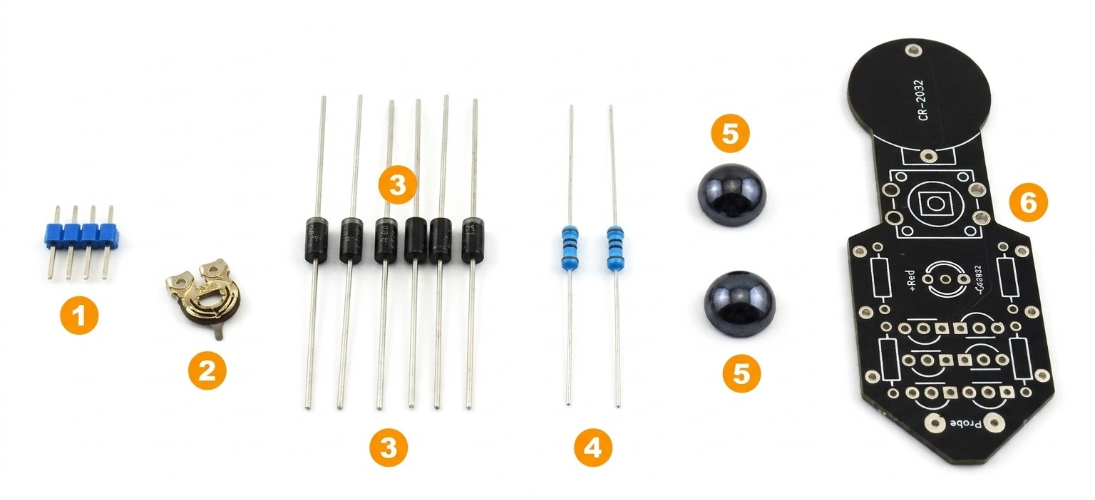
PARTS LIST | |||||
No. | Category | Name | Specifications | Quantity | Remarks |
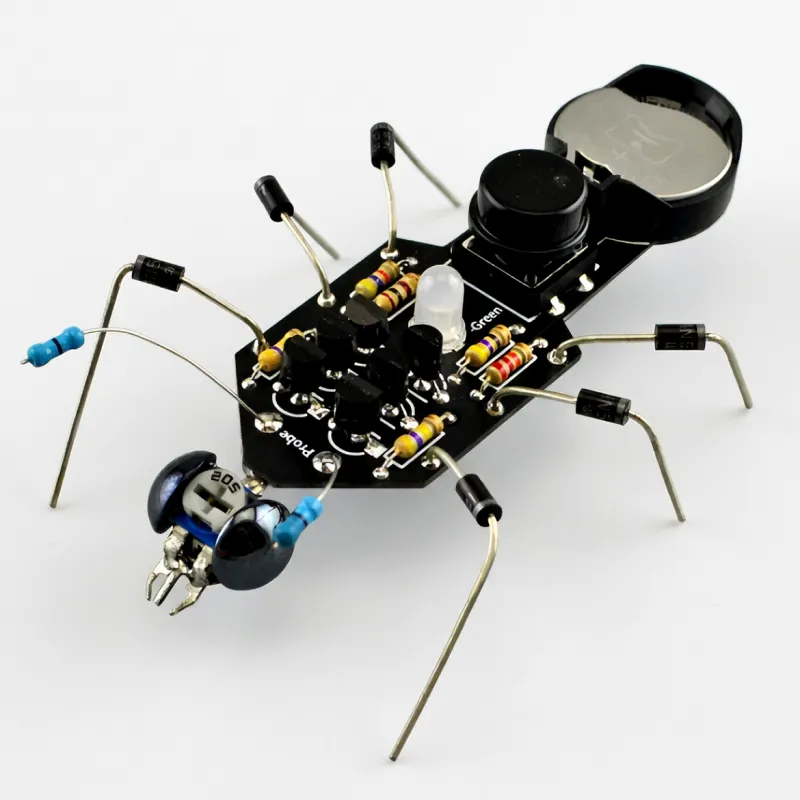
1 | Electronic Components | Adjustable Resistor | Miniature Adjustable Resistor | 1 | Head |
2 | Miniature Adjustable Resistor | 1 | Head | ||
3 | Diode | Black Plastic Encapsulated Diode 1W | 6 | Legs | |
4 | Resistor | Metal Film Color Ring Resistor Blue 1/4W 0 Ohm | 2 | Antennae | |
5 | Decoration | Ceramic Beads | Round 10mm Diameter Flat Bottom Black | 2 | Eyes |
6 | Other | Circuit Board | PVC Printed Circuit Board | 1 | Body |
Company Introduction
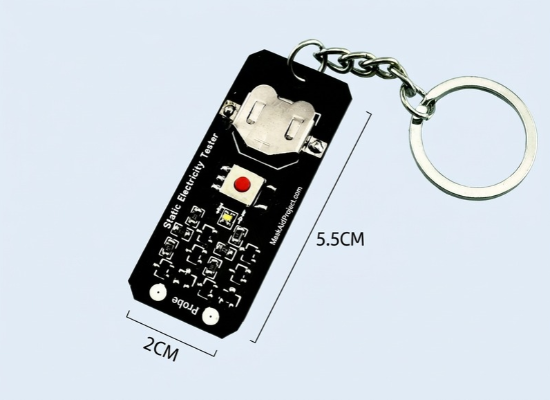
Compact Powerful
Quick and convenient electrostatic testing—ensure
the masks you use are effective
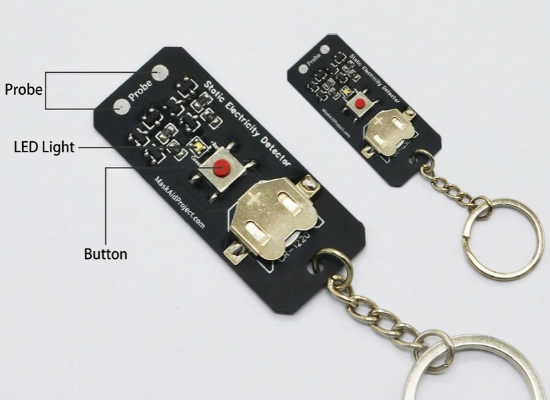
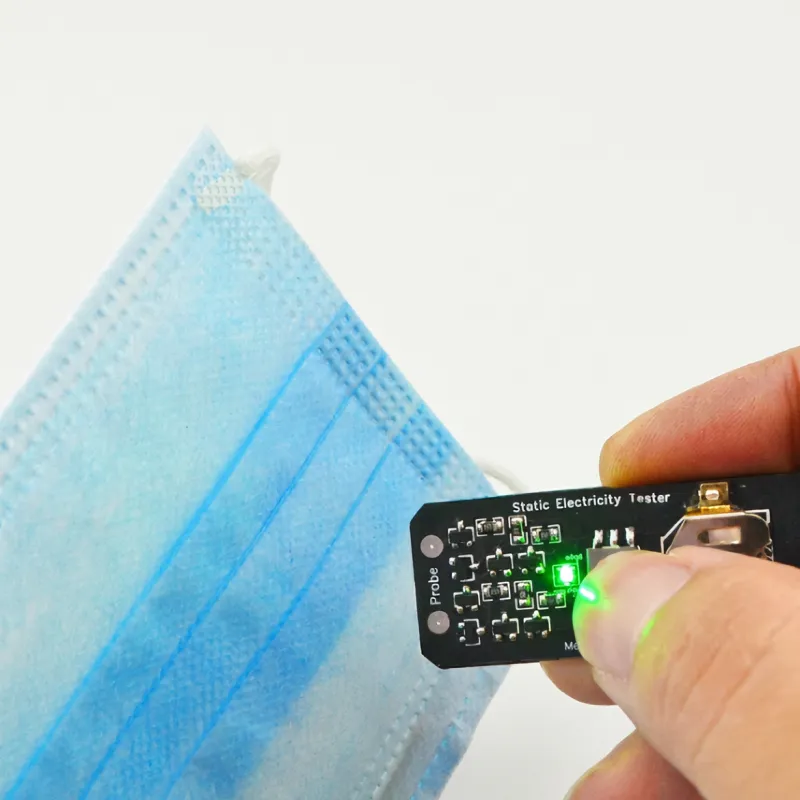
Instructions for Use: Keep the probe of the static electricity detector about 2-3 cm away from the mask, press the red button, and sweep back and forth across the surface of the mask while maintaining this distance. Observe the flashing status of the LED light.
Test Result Description: (1) If the LED light flashes noticeably, it indicates that the static electricity intensity on the mask is sufficient to filter fine particles.(2) If the LED light does not flash noticeably, it indicates that the static electricity on the mask is too weak to be effective. This may be because it does not contain melt-blown fabric, is of inferior quality, has expired, or is a used mask.
Application Scenarios
1. Product Selection
Identify the type and quality of masks to choose qualified mask products.Only meltblown fabric masks carry static electricity, but not all meltblown masks retain it. Testing static electricity helps identify mask types and quality, ensuring you select qualified products.
2. Expiration Prevention
Expired masks lose static charge; testing ensures you don't wear expired protection.Masks have a shelf life. After manufacturing, the applied high-voltage static charge naturally diminishes over time—even when unused—leading to loss of effectiveness. Quality materials and proper packaging extend this shelf life.
3. Effectiveness Testing
Unsealed or opened masks lose static charge quickly; testing before use guarantees effective protection.Unsealed or opened masks are vulnerable to environmental factors like humidity, which accelerates static charge loss. Testing static charge before use ensures the mask is still effective.
4. Eco-Friendly Usage
Monitoring static charge during use maximizes lifespan safely and sustainably.Moisture from breathing dissipates static charge, usually requiring mask replacement every 4 hours. By monitoring static loss during intermittent use, you can safely maximize each mask's lifespan, saving money and reducing waste.

1 Limited duration of use
Because human breath contains water vapor, which causes the static electricity on a mask to dissipate rapidly, the mask should generally be replaced every 4 hours.

2 Poor Quality
The melt-blown fabric used in the mask may be of poor quality, or the high-voltage electret charging process—used to impart static electricity—may be flawed. This results in insufficient static charge or an inability to retain that charge over time, thereby compromising the mask's filtration efficiency.
3 Improper storage
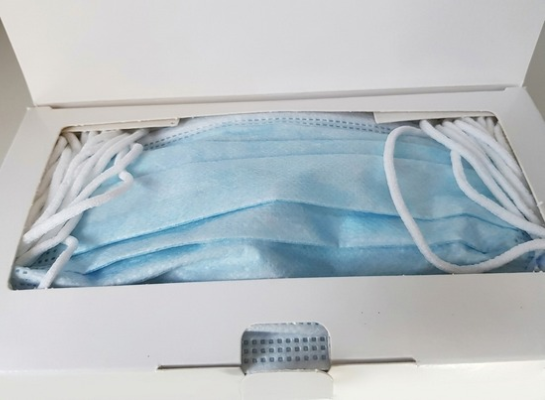
If a mask is not used promptly after being unsealed and is not properly resealed, its static charge will dissipate too quickly.

4 Expiration
Even if stored properly, the static charge in a brand-new, unused mask will naturally weaken and eventually disappear within 1–2 years, rendering the mask unusable
Special note: The masks discussed above all refer to medical masks and N95 masks that use melt-blown cloth as a filter element.
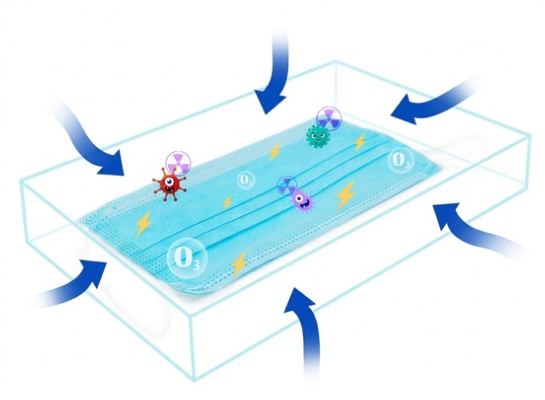
Disinfection, Sterilization &
Electrostatic Recharging 2-in-1
Disinfection methods: High-voltage pulsed electric field, positive/negative ions and ozone
UVC (deep-ultraviolet) light (optional)
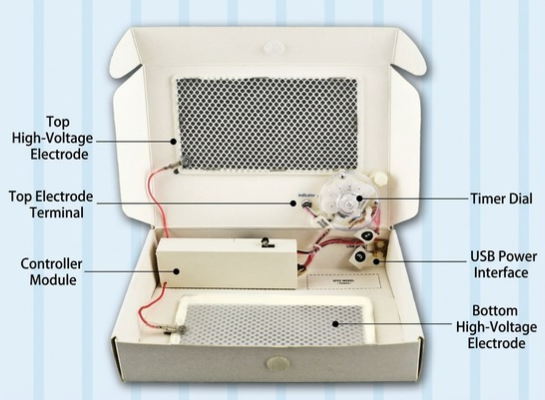
Food-grade paperboard casing
hygienic and eco-friendly
Compact size, powerful performance
Product dimensions (L x W x H): 210 x 150 x 75 mm