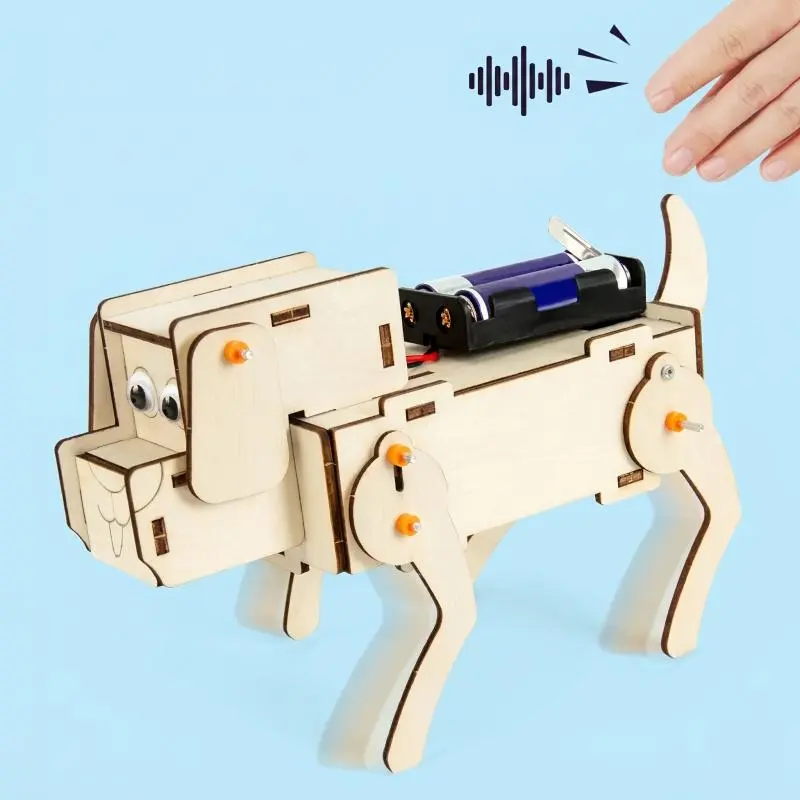


Product Description
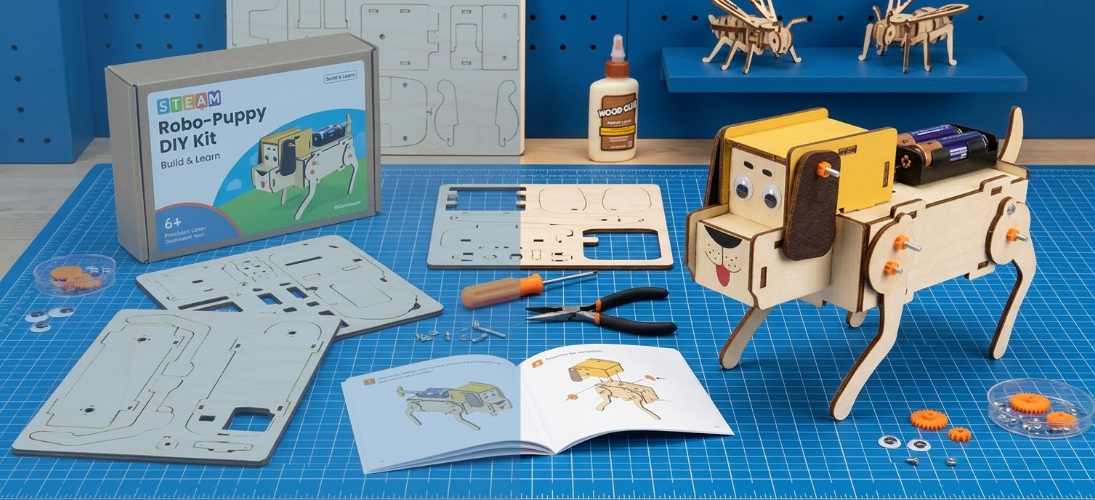
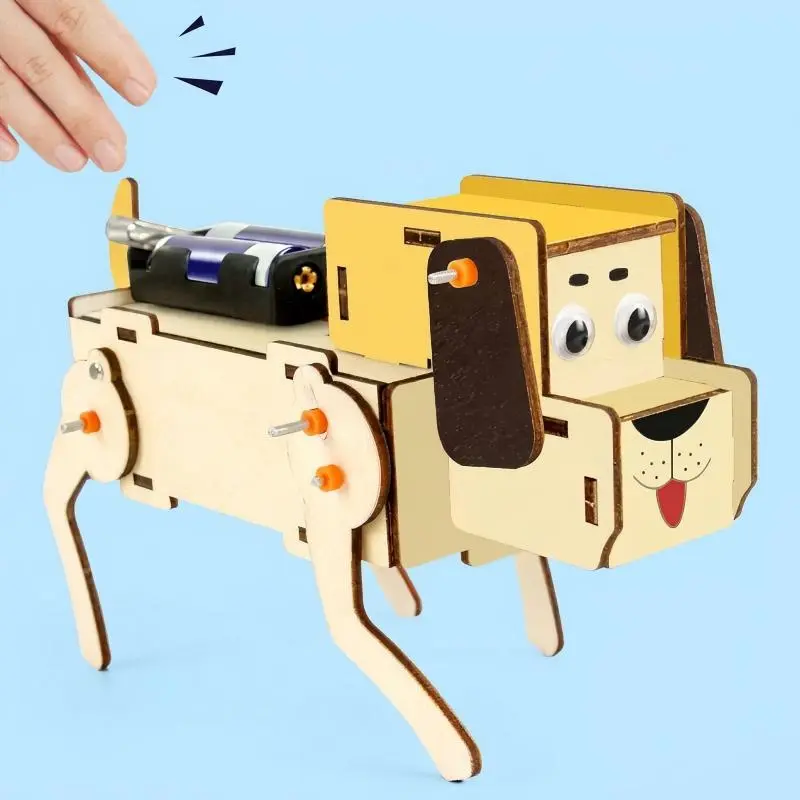
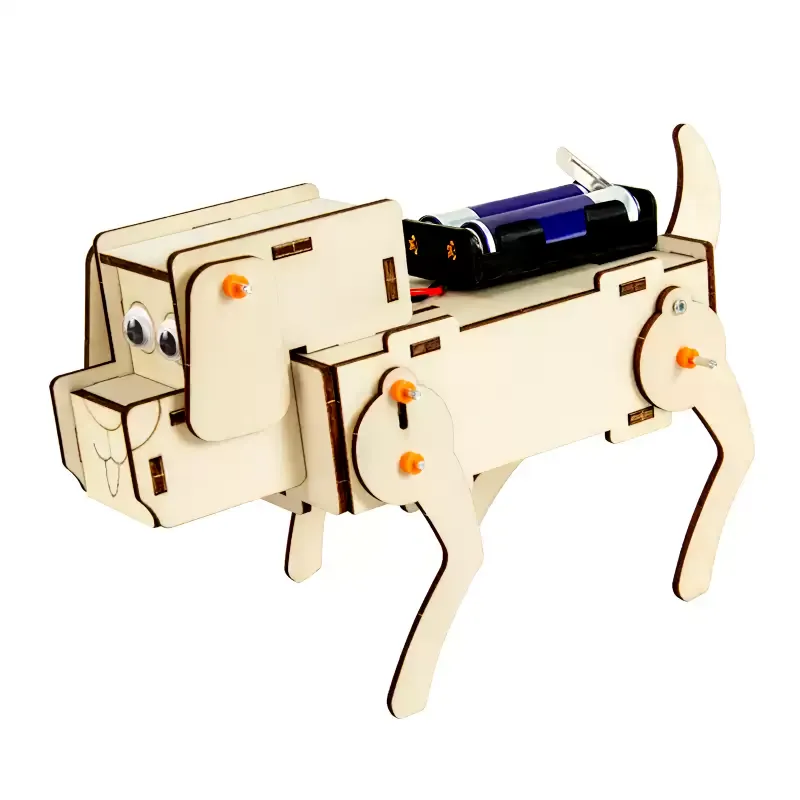
Voice-Controlled
Mechanical Dog
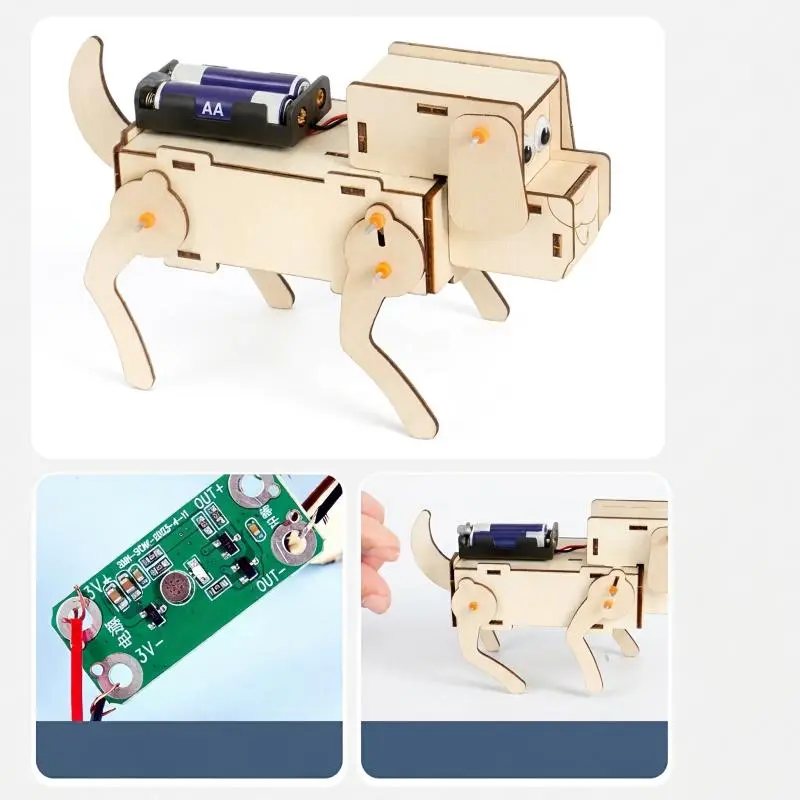
Learn how sound wave signals are
converted into electrical signals
PHYSICAL ENLIGHTENMENT |
ASSEMBLY ABILITY |
IMAGINATION |
SAFETY MATERIALS |




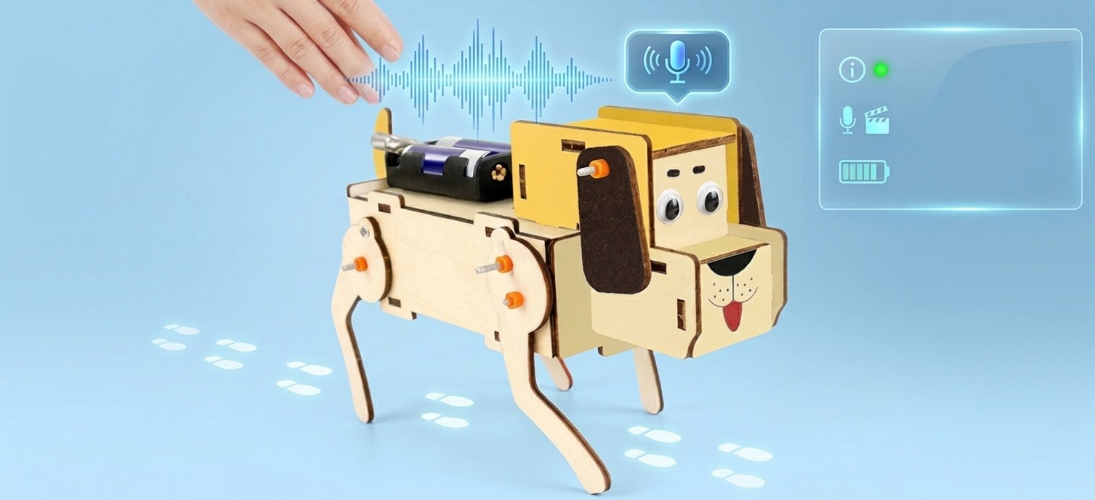
Capture a child’s curiosity
How does a voice-controlled robotic dog move?
|
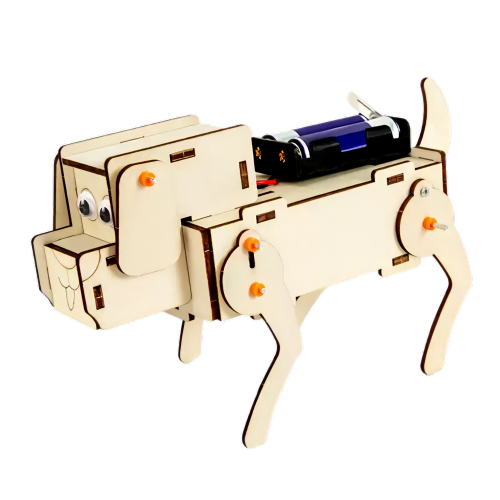
|
|
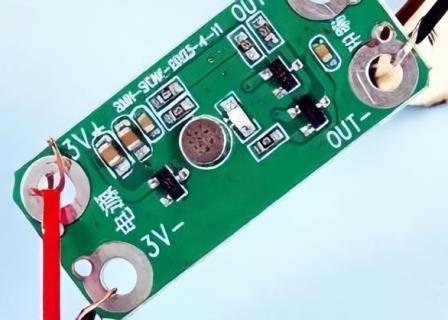
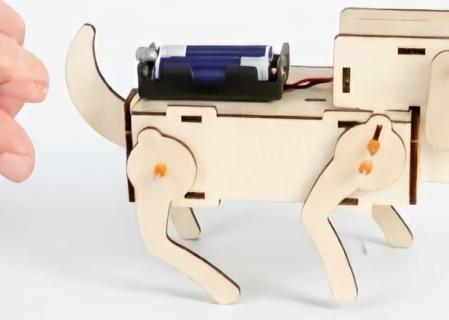
When there is sound in the surrounding environment, a sound-activated sensor detects the sound wave signals and converts them into electrical signals. | The electrical signal enters the signal processing module, where it is converted into a corresponding control signal that causes the robotic dog to move forward. |
Functional Features
Thoughtful details, crafted with care.
When children are safe, parents can rest easy.
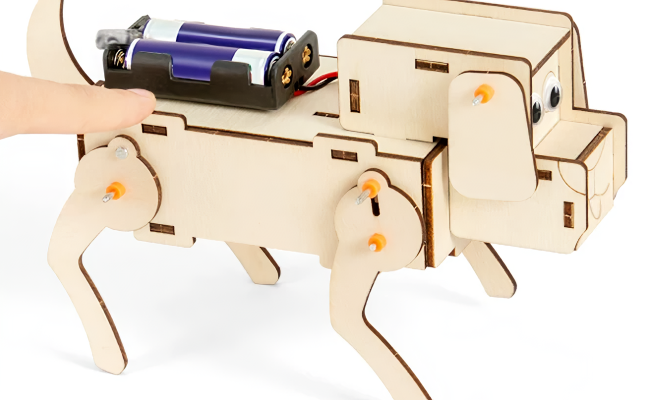
Engaging, hands-on DIY projects that foster children's focus and concentration |
Carefully selected raw materials thick, durable, and odorless. |
Exquisitely designed and meticulously crafted |
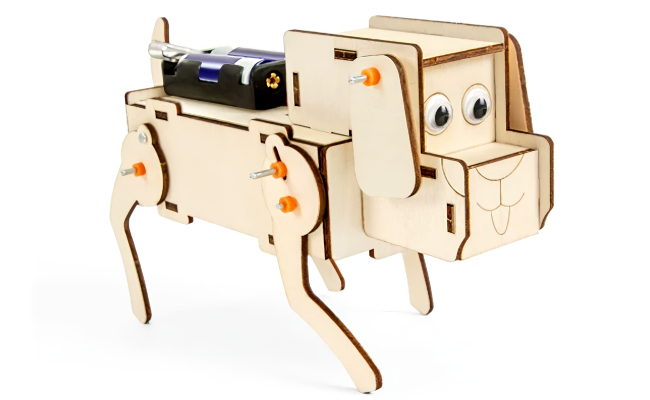
Product parameters
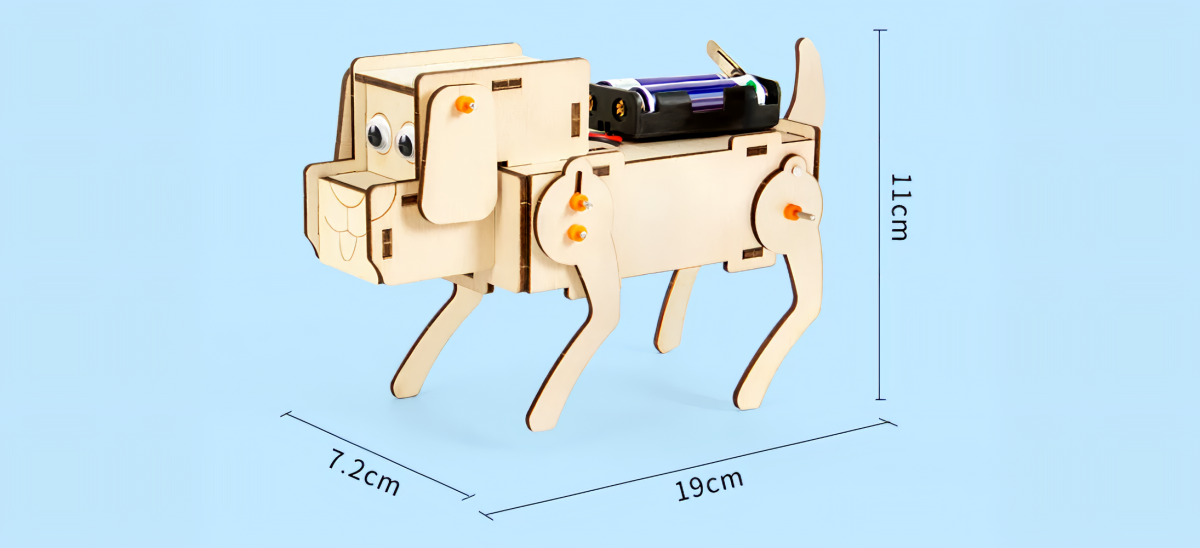
Brand | KQU | Recommended Age | Ages 10 and up |
Product Name | Voice-Controlled Mechanical Dog | Package Dimensions | 17.5 × 25 cm |
Product Material | Multi-material | Product Weight | Approx. 171 g |
Type of Experiment | Physical (Mechanical) | Packaging Method | Individually packaged |
Packing List
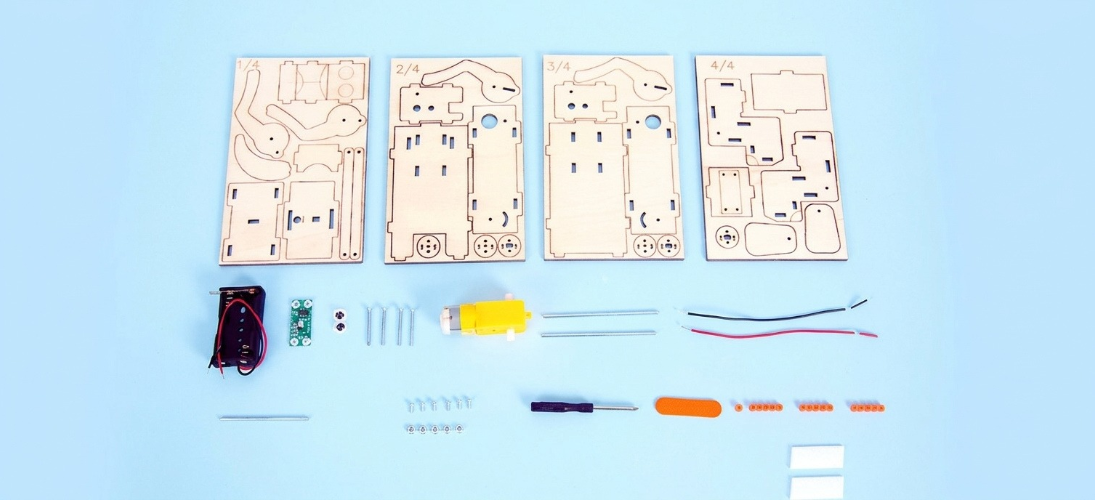
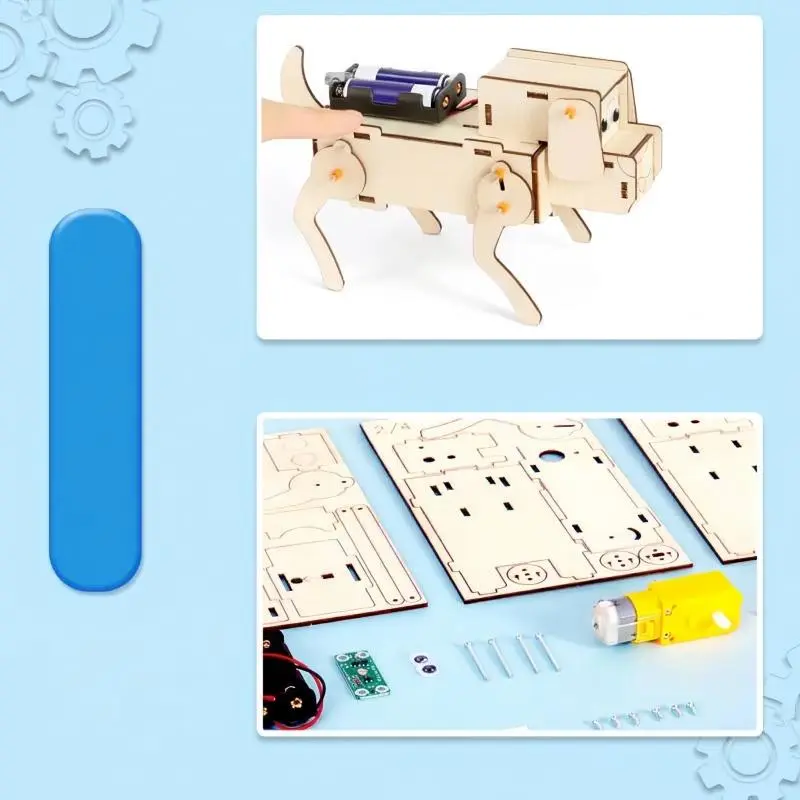
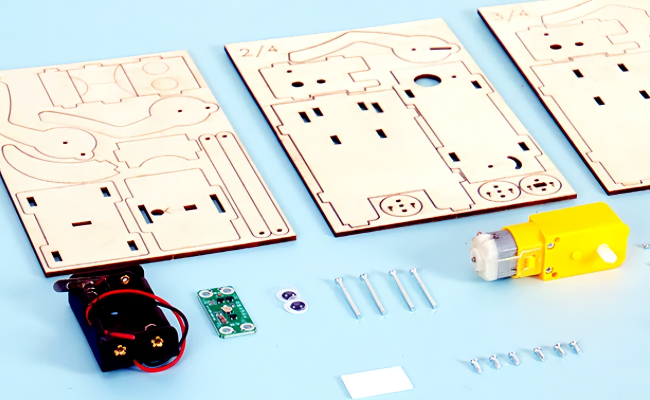
Plank 1 Plank 2 Plank 3 Plank 4
Small eyes*2
Voice-controlled board Gear motor Long metal shaft × 2 Red wire
Knife-switch battery holder
(Requires two AA carbon-zinc batteries, not included) Screwdriver File Bushing × 16
Short iron axle Screws × 6
Long foam adhesive strips × 2