


Summary: Researchers have developed a rigid hybrid perovskite material with thermal conductivity approaching that of air, opening new possibilities for energy-efficient coatings, batteries, electronics, and thermal management systems.
A research team has reported an exceptionally low thermal conductivity in a new class of layered hybrid organic-inorganic perovskites (HOIPs), achieving thermal insulation performance previously associated mainly with porous aerogels and foams while maintaining the mechanical rigidity of a dense solid. The study was published in Science Advances on September 18, 2026.
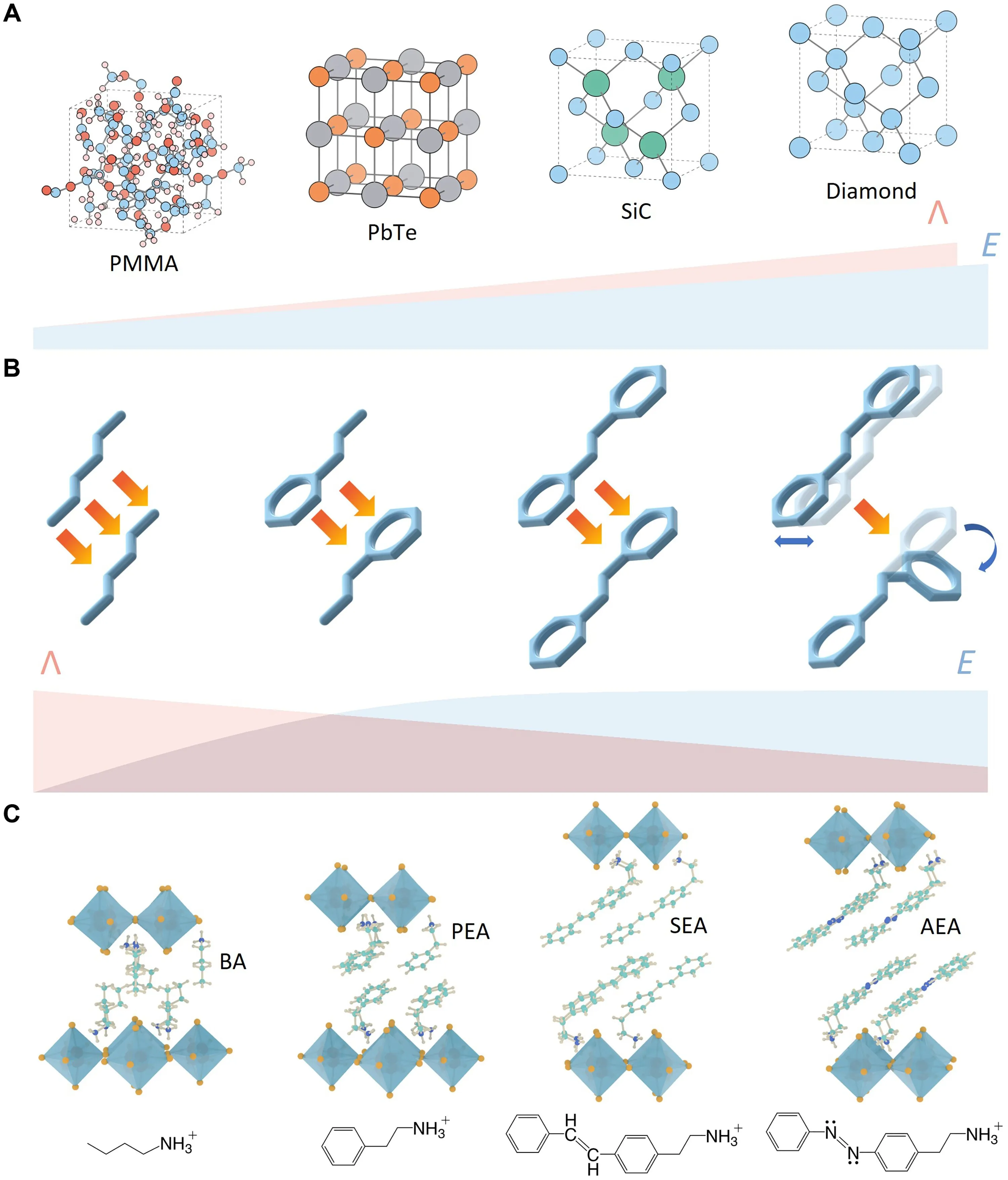
Engineering Principle and Material Design
The breakthrough centers on azobenzene ethyl ammonium lead iodide, known as (AEA)₂PbI₄, a layered perovskite engineered with specially designed organic molecules. Researchers measured a room-temperature thermal conductivity of approximately 0.043 W m⁻¹ K⁻¹, approaching the thermal conductivity of air (0.026 W m⁻¹ K⁻¹) and setting a new benchmark for fully dense solid materials.
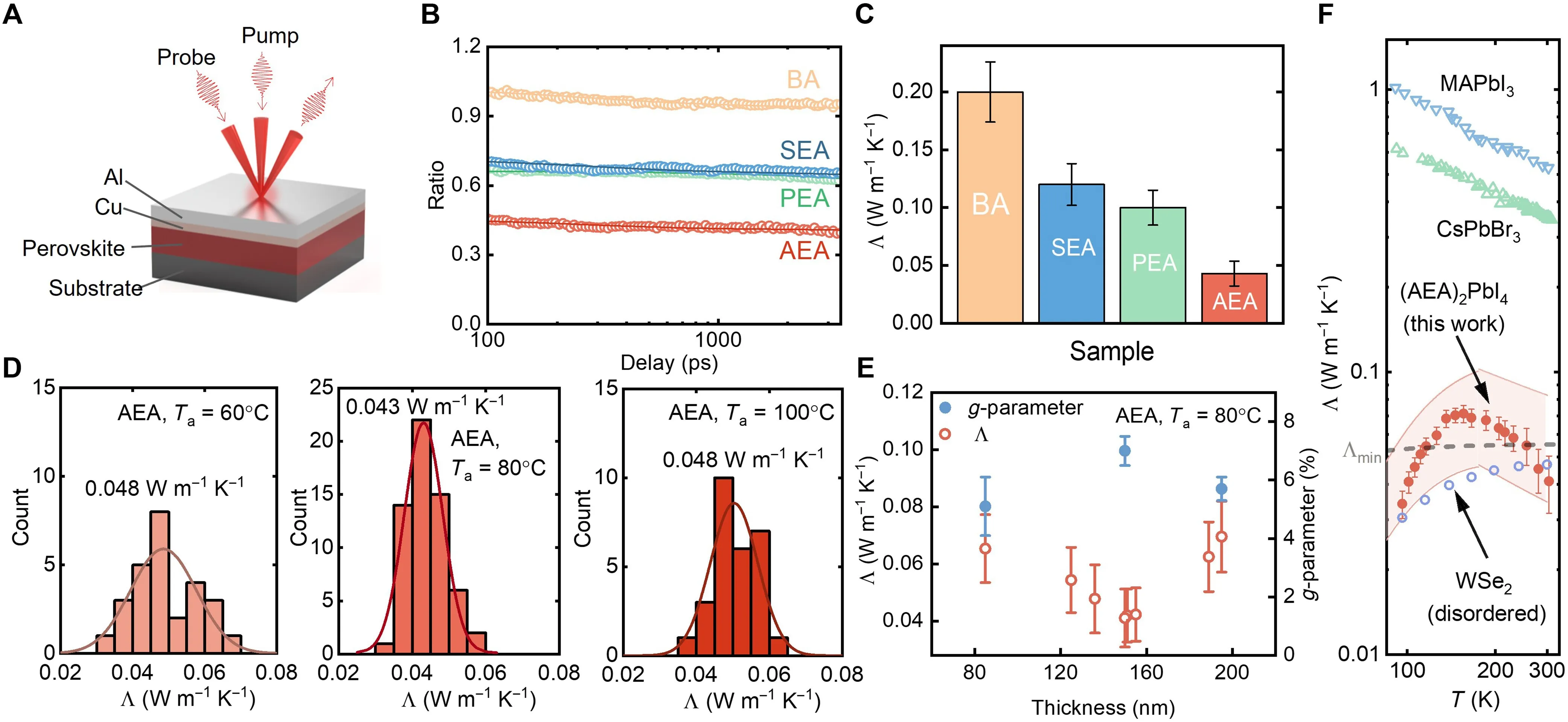 Thermal Conductivity Measurements
Unlike conventional thermal insulators, which often sacrifice strength for insulation, the new perovskite remains mechanically robust. The material demonstrated an elastic modulus of approximately 7.7 GPa, exceeding that of many plastics, foams, and aerogels while retaining ultralow heat transport characteristics.
According to the researchers, the performance results from molecular engineering of the organic layers inside the perovskite structure. Aromatic double-ring molecules create strong rigidity while simultaneously disrupting heat flow through stacking disorder and molecular torsion. This combination suppresses thermal transport without weakening the material.
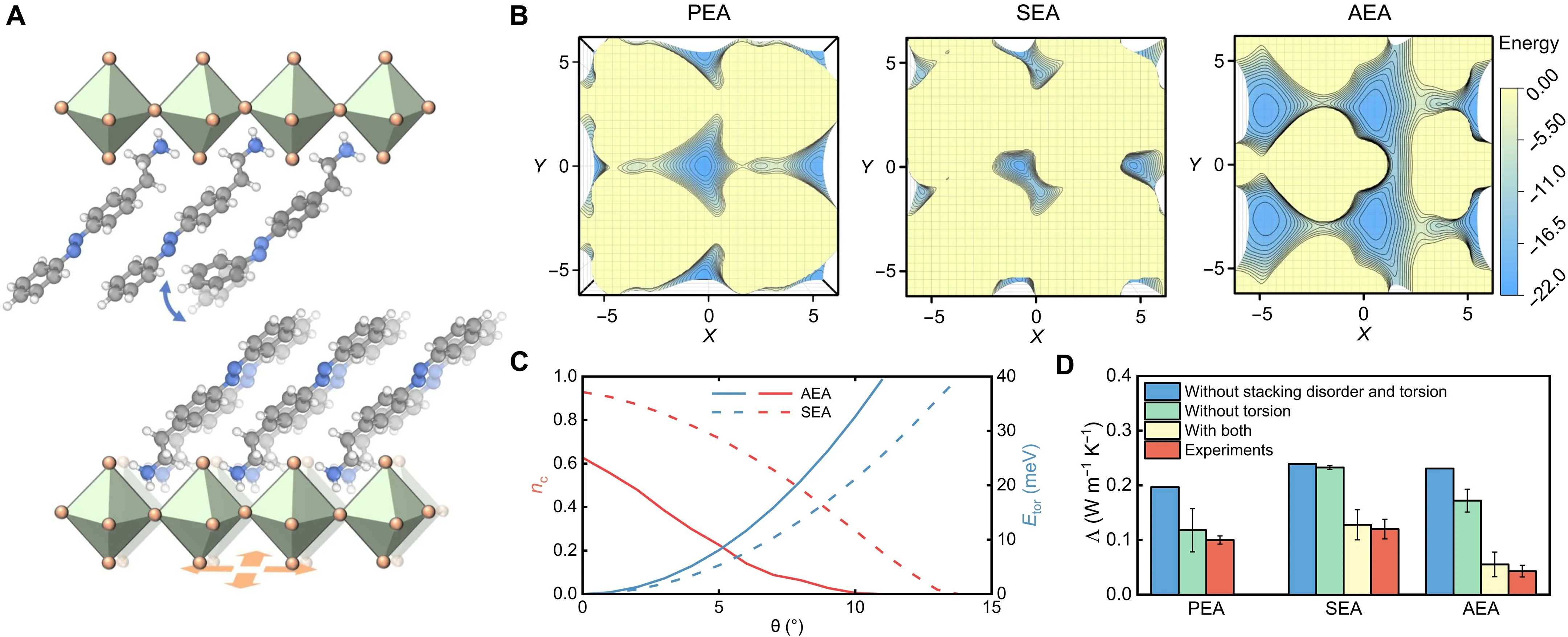 Disorder Mechanisms and Modeling
The team found that enhanced stacking disorder within the layered crystal structure played a key role in achieving record-low thermal conductivity. Measurements showed that films around 150 nanometers thick consistently delivered values below 0.05 W m⁻¹ K⁻¹, demonstrating repeatable performance rather than an isolated result.
Potential applications include battery thermal management, energy storage systems, solar cells, fuel cells, electronics cooling, thermal barrier coatings, and space energy technologies. The solution-processable nature of the material also makes it suitable for large-area coatings and flexible devices.
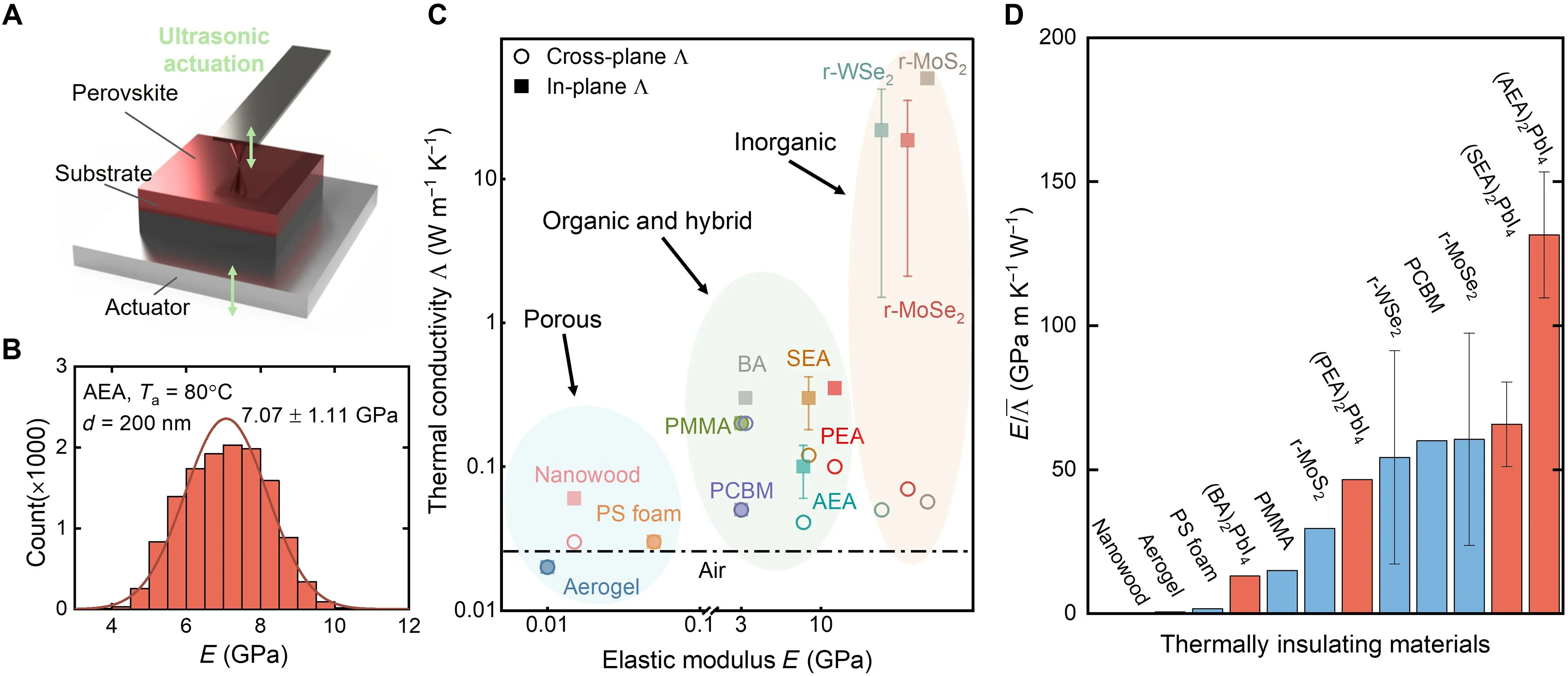
Mechanical Properties and Performance Comparison
With thermal conductivity close to air yet mechanical properties far exceeding traditional insulating materials, the new layered perovskite demonstrates a promising route toward next-generation thermal insulation materials. Researchers believe further molecular engineering could push thermal conductivity even closer to the theoretical lower limit while preserving structural strength.

