


Summary: NVIDIA and the Jülich Supercomputing Centre have completed a record-scale simulation of a 104-physical-qubit fault-tolerant quantum computing protocol on Europe’s JUPITER exascale supercomputer, using 8,192 NVIDIA GH200 GPUs. By modeling realistic hardware noise in magic state cultivation, the project validates an approach that NVIDIA says could reduce the physical-qubit overhead for magic-state preparation by 90%, helping researchers evaluate quantum error-correction designs before building expensive hardware.
Quantum computing research is advancing on two fronts: improving the performance of physical quantum processors and using classical supercomputers to understand how large-scale, error-corrected quantum systems will behave. NVIDIA and Germany’s Jülich Supercomputing Centre have now pushed the second approach to a new scale, simulating a 104-physical-qubit fault-tolerant quantum computing protocol on JUPITER, Europe’s first exascale supercomputer.
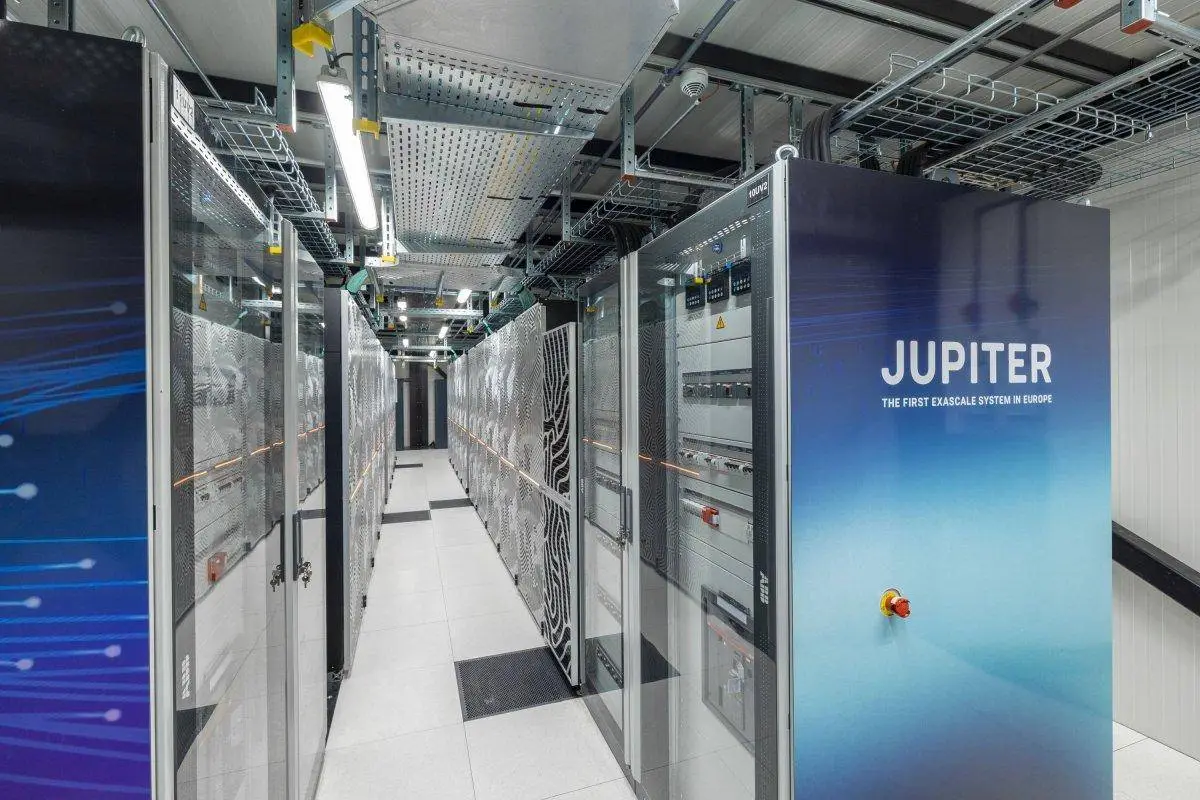
JUPITER, Europe's first exascale supercomputer, hosted NVIDIA's large-scale simulation of a fault-tolerant quantum computing protocol.
Announced on October 19, 2026, the project used 8,192 NVIDIA GH200 Grace Hopper superchips to model magic state cultivation under realistic hardware-noise conditions. NVIDIA describes the work as the largest comprehensive simulation of a fault-tolerant quantum computing protocol of its kind to date. Unlike an earlier 50-qubit simulation conducted under ideal, noise-free conditions, the new work incorporates more detailed error mechanisms that can affect real quantum hardware.
The simulation used NVIDIA’s cuQuantum software, including the cuStateVec state-vector library, alongside the fault-tolerant logical layer of the CUDA-Q platform to construct and execute the quantum circuit. The model included random bit-flip and phase-flip errors, as well as coherent phase errors that can accumulate and interfere with one another. It also accounted for quantum-state leakage, in which a physical qubit leaves its normal two-level computational space and occupies an additional energy level.
The computational demands were substantial. The simulated protocol spanned 104 physical qubits and used an encoded register of 45 qubits to represent approximately 35.2 trillion complex amplitudes. The distributed quantum state occupied around 512 TiB of GPU memory across the system. This scale illustrates why detailed simulation of quantum circuits becomes increasingly difficult as the number of qubits and the complexity of their error mechanisms grow.
At the center of the project is magic state cultivation, a technique intended to make fault-tolerant quantum computing more resource-efficient.
Quantum computers are highly sensitive to noise and operational errors. Quantum error correction can protect logical information, but practical, universal quantum computation also requires special resource states known as magic states. These states enable important operations that cannot be implemented using Clifford gates alone, and they must be prepared repeatedly as a computation proceeds.
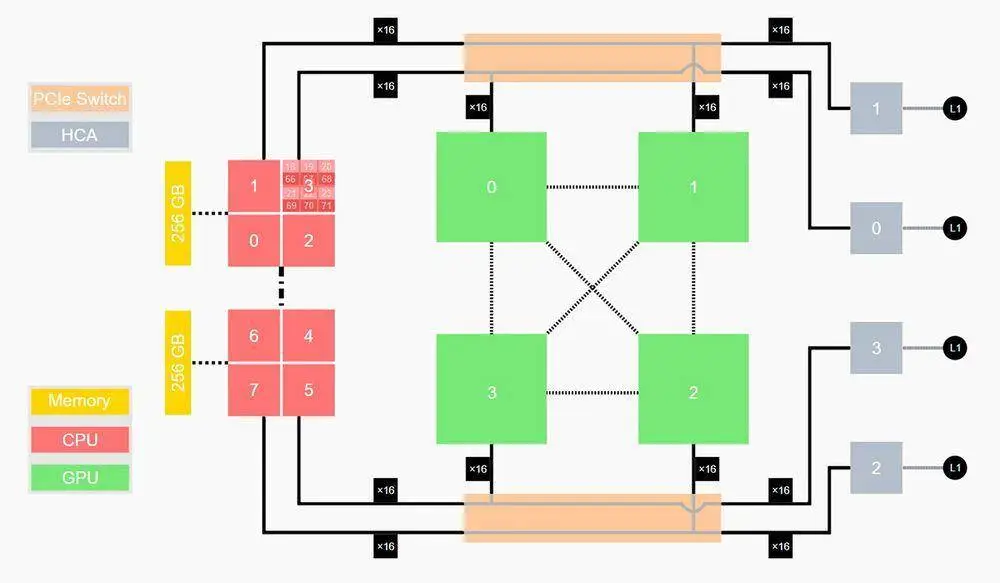
A 104-physical-qubit simulation models magic-state preparation, error detection and code growth under realistic hardware-noise conditions.
Conventional magic-state distillation can consume a substantial number of physical qubits. NVIDIA’s simulation examined an alternative cultivation protocol that prepares and checks a magic state in a smaller error-correcting code before expanding it into a larger code. According to NVIDIA, this approach can reduce the physical-qubit resources required for magic-state preparation by as much as 90% compared with previous methods. The result is a promising route toward lowering the hardware overhead of fault-tolerant quantum processors, although the precise savings depend on the protocol, error assumptions and system design.
The project followed a staged development process. Researchers first developed and tested their simulation methods on NVIDIA’s GB200 NVL72 platform at the NVIDIA Accelerated Quantum Research Center. They then scaled the workload from a small number of GPUs to hundreds before moving to JUPITER for the full-scale run using 8,192 GH200 GPUs. NVIDIA says this workflow helped reduce a simulation effort that would otherwise have taken weeks to just days.
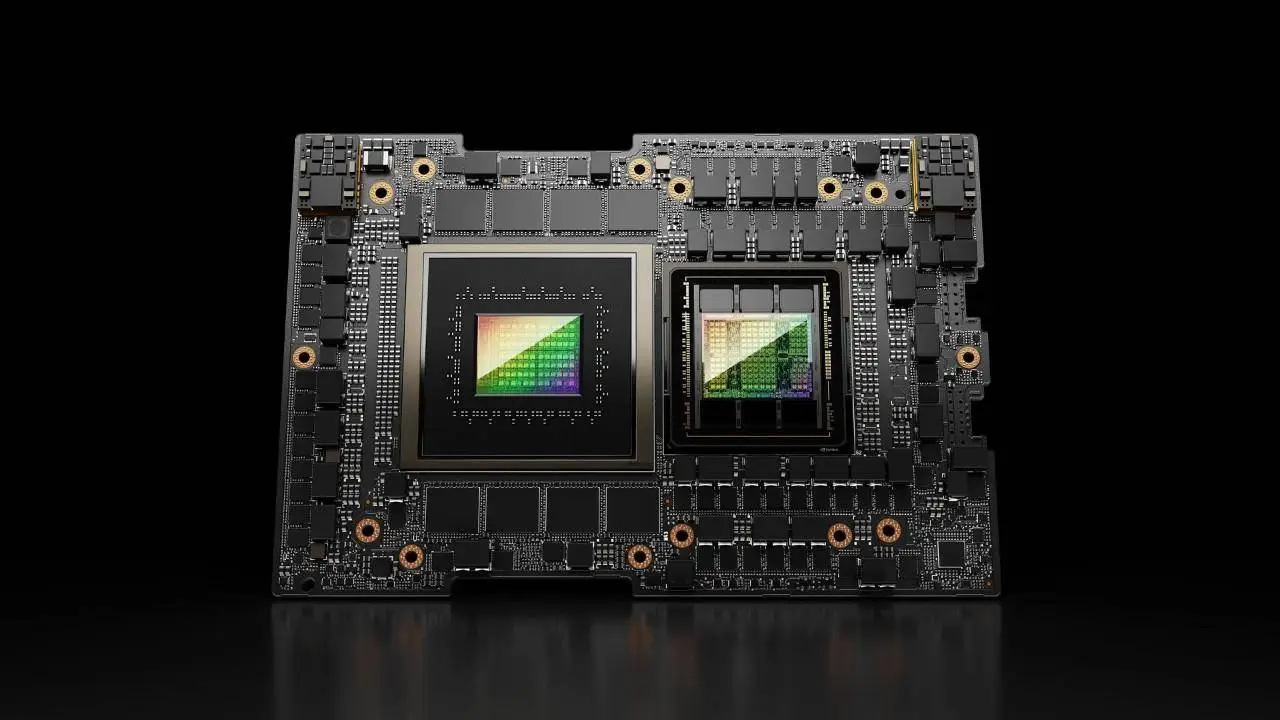
NVIDIA GH200 Grace Hopper superchips powered the distributed simulation on the JUPITER exascale supercomputer.
The broader significance is that GPU-powered supercomputers could become an essential design tool for quantum computing. By studying how errors propagate through a proposed circuit before fabricating a processor, researchers can compare error-correction strategies, identify vulnerable operations and estimate resource requirements. This could reduce costly hardware trial and error and accelerate development in areas such as drug discovery, financial modeling and materials science.
The approach complements progress on physical quantum hardware. Google Quantum AI has been investigating magic-state cultivation on its Willow superconducting quantum processor, while Quantinuum has reported high logical-gate fidelity on its Helios system. These efforts address different parts of the same challenge: demonstrating reliable quantum operations on actual hardware and developing architectures capable of scaling them into useful, fault-tolerant systems.
NVIDIA CEO Jensen Huang emphasized that practical fault-tolerant quantum computing requires extraordinarily complex systems, making large-scale simulation essential to understanding how they will behave. Kristel Michielsen, director of the Jülich Supercomputing Centre, similarly noted that JUPITER gives researchers access to scientific questions that were previously beyond reach.
The achievement does not mean that a 104-qubit fault-tolerant quantum computer has been built or that commercial quantum computing is already solved. It demonstrates how classical GPU supercomputing can model a complex quantum error-correction protocol at unprecedented scale, providing a stronger basis for evaluating future hardware.
As quantum processors continue to develop, the combination of quantum hardware, error-correction research and exascale simulation could become increasingly important. The path to practical quantum computing may depend not only on building better qubits, but also on using powerful classical computers to determine how those qubits can work together reliably.

