


Summary: Researchers at the Hong Kong University of Science and Technology (HKUST) have developed an anode-free lithium-metal battery that achieves an energy density of 467 Wh/kg in a pouch cell. A full-cell coin-cell configuration retains 90% of its capacity after 200 charge-discharge cycles, using a silver-ion-based AMI additive to stabilize lithium deposition and the solid electrolyte interphase (SEI).
How can next-generation batteries store more energy while weighing less and lasting longer? A research team led by Professor Minhua Shao at HKUST has developed a new approach to anode-free lithium-metal batteries, eliminating the separate anode and allowing lithium to deposit directly onto a bare copper current collector. The findings were published in Nature Communications.
Lithium metal is attractive for high-energy-density batteries because of its high specific capacity and low reduction potential. Anode-free battery designs take advantage of these properties by using a bare copper current collector instead of a dedicated anode, reducing inactive materials, battery weight, and manufacturing complexity.
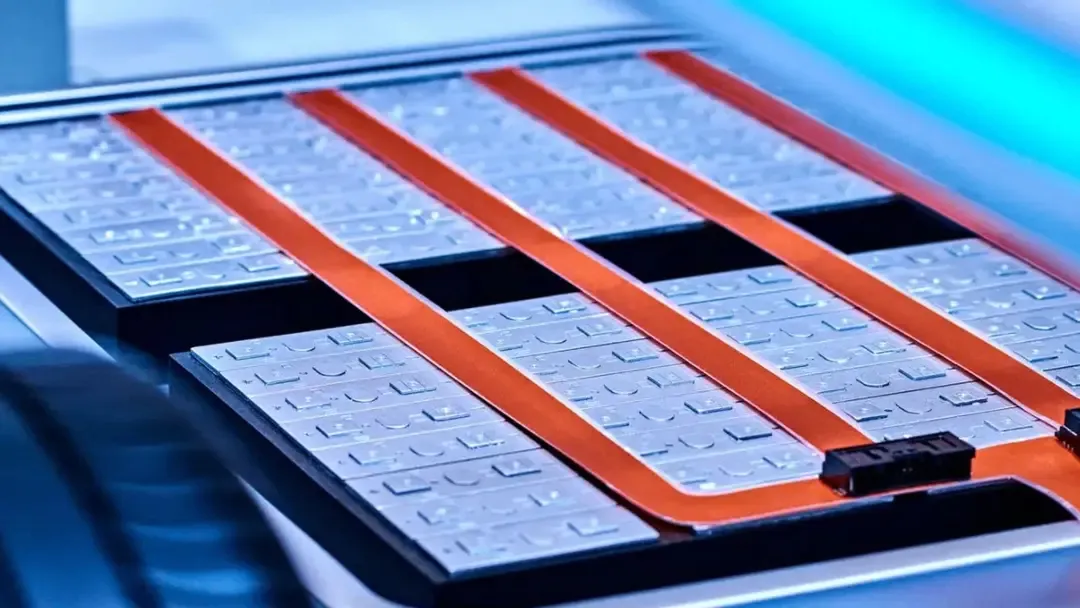
Anode-free lithium battery. (Representational image)
However, conventional copper surfaces do not readily promote uniform lithium deposition. Uneven growth can produce lithium dendrites, which may damage battery components and increase safety risks. An unstable solid electrolyte interphase (SEI)—the protective layer that forms on the electrode surface—can also disrupt lithium-ion transport and shorten battery life.
To address these challenges, the researchers introduced an AMI additive containing silver ions and anions. After cell assembly, the additive triggers controlled interfacial reactions. Silver ions modify the copper surface to improve its affinity for lithium, promoting more uniform deposition, while anion-derived components help build a more stable SEI.
The resulting interface features an organic-rich inner layer and an inorganic-rich outer layer. Meanwhile, reactions initiated by released anions form a quasi-solid-state gel between the two layers, helping maintain close contact between the electrode and electrolyte. Together, these mechanisms are designed to improve reversible lithium plating and stripping, suppress dendrite formation, and enhance cycling stability and battery safety.
Performance tests showed that the anode-free lithium-metal pouch cell achieved 467 Wh/kg, while a full-cell coin-cell configuration retained 90% capacity after 200 charge-discharge cycles.
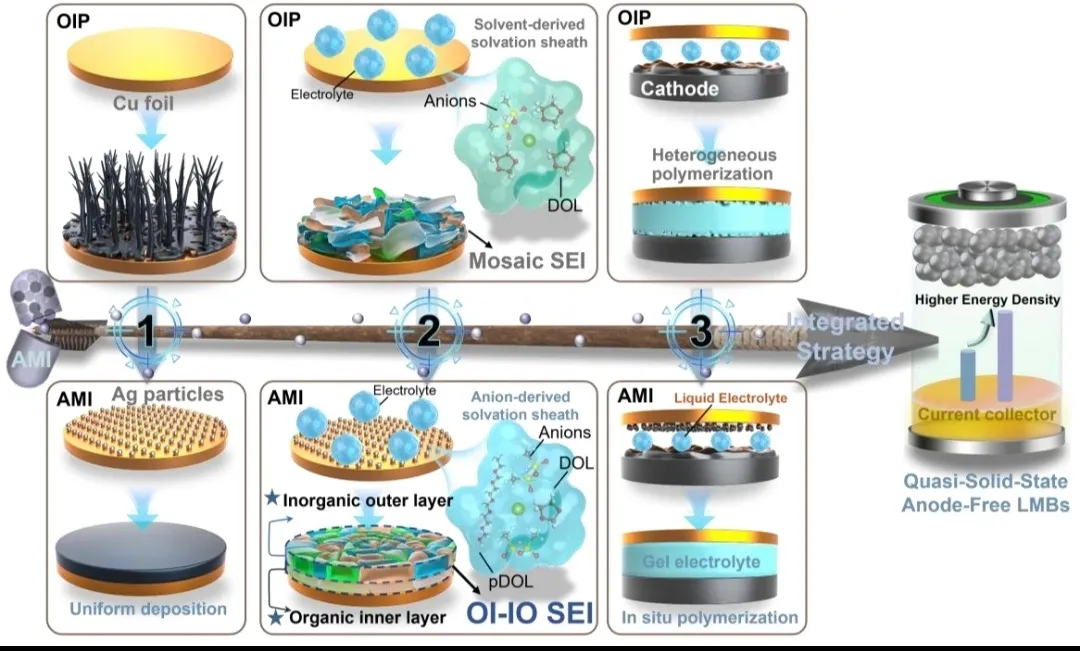
Shao, the paper's corresponding author and head of HKUST's Department of Chemical and Biological Engineering, said the key innovation lies not simply in adding a silver salt or polymerization initiator, but in integrating current-collector modification, anion-derived solvation structures, SEI formation, and quasi-solid-state gel development into a controlled process after cell assembly. This integrated interface-engineering strategy enables highly reversible lithium deposition and removal in an anode-free, quasi-solid-state configuration.
Despite the promising results, further research is needed to determine whether the technology can maintain its performance in larger cells and under demanding real-world operating conditions. Nevertheless, the approach offers a potential pathway toward higher-energy-density lithium batteries, longer battery life, and safer next-generation energy storage.

