


Summary: Researchers at EPFL have developed LogSync, an ultra-low-power neural system-on-chip (SoC) that decodes synchronized activity across multiple brain regions to enable real-time adaptive deep brain stimulation (DBS). Consuming less than 200 microwatts, the chip could advance next-generation closed-loop neuromodulation for psychiatric disorders, Parkinson’s disease, and other neurological conditions.
Traditional closed-loop deep brain stimulation (DBS) systems often rely on signals from a single brain region, limiting their ability to address psychiatric disorders associated with abnormal brain network interactions. Researchers at EPFL have developed LogSync, an implantable neural chip that synchronously decodes activity across multiple brain regions to support real-time, adaptive stimulation.
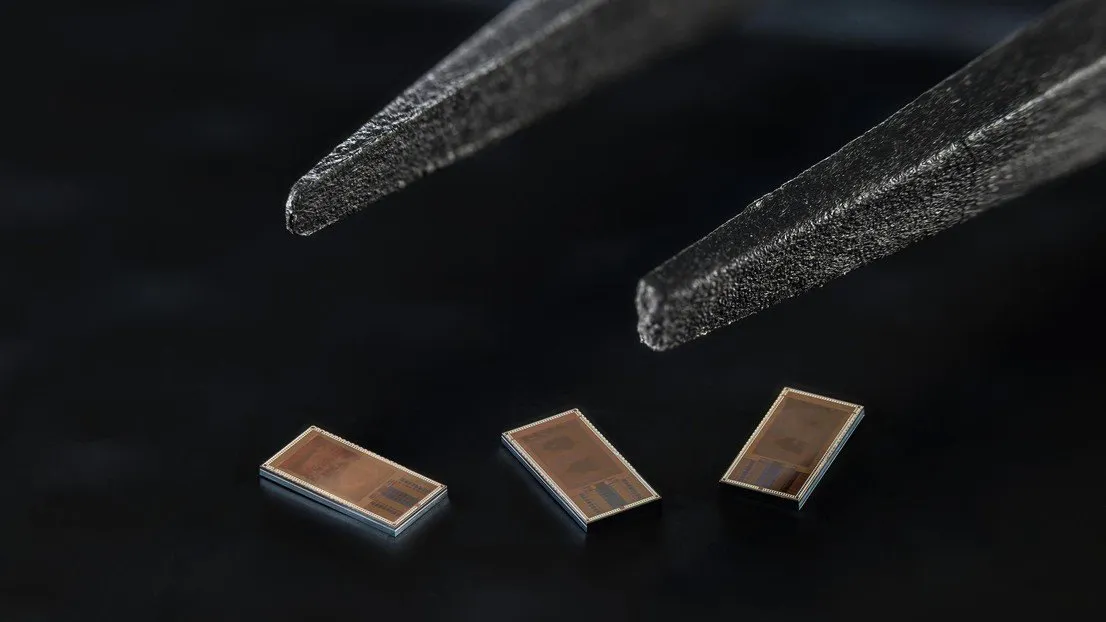
DBS is a major neuromodulation technology widely used to treat movement disorders and is increasingly being explored for severe psychiatric conditions. However, significant limitations remain. Many existing devices deliver open-loop stimulation at fixed settings, while most current closed-loop systems monitor signals from only one brain region.
Psychiatric disorders are increasingly understood as conditions involving abnormal interactions across brain networks rather than dysfunction confined to a single region. Monitoring activity at only one site can therefore miss important pathological signals. Building on this understanding, the Integrated Neurotechnology Laboratory led by Mahsa Shoaran at EPFL developed the LogSync implantable neural system-on-chip.
LogSync simultaneously acquires neural signals from multiple brain regions and extracts two types of network biomarkers: oscillation amplitude and interregional neural synchrony. An on-chip machine learning model then classifies cognitive and emotional states and generates stimulation triggers when needed, creating a closed-loop system that connects neural state recognition with adaptive intervention.
Supported by a dedicated grant from the US National Institute of Mental Health (NIMH), the research builds on the team's previous work in on-chip brain-computer interfaces and neuromodulation chips. The study brings network-level neural biomarkers and adaptive decoding onto an implantable chip, with findings published in an IEEE journal.
Validation involved both offline analysis of human data and in vivo animal experiments. Using previously collected human neural datasets from psychiatric experiments, the algorithm successfully distinguished between cognitive engagement and emotional arousal. Experiments in live rats further demonstrated that the chip could track brain oscillations in real time and deliver stimulation pulses at precisely defined phases.
Power efficiency is a key engineering achievement. Implantable neural devices face strict power and size constraints, making complex signal processing difficult. Through hardware-software co-design and logarithmic computation, the team substantially reduced the computational cost of brain network analysis and biomarker extraction. The complete system consumes less than 200 microwatts while performing multi-region neural signal processing and machine learning-based decoding within a compact footprint.
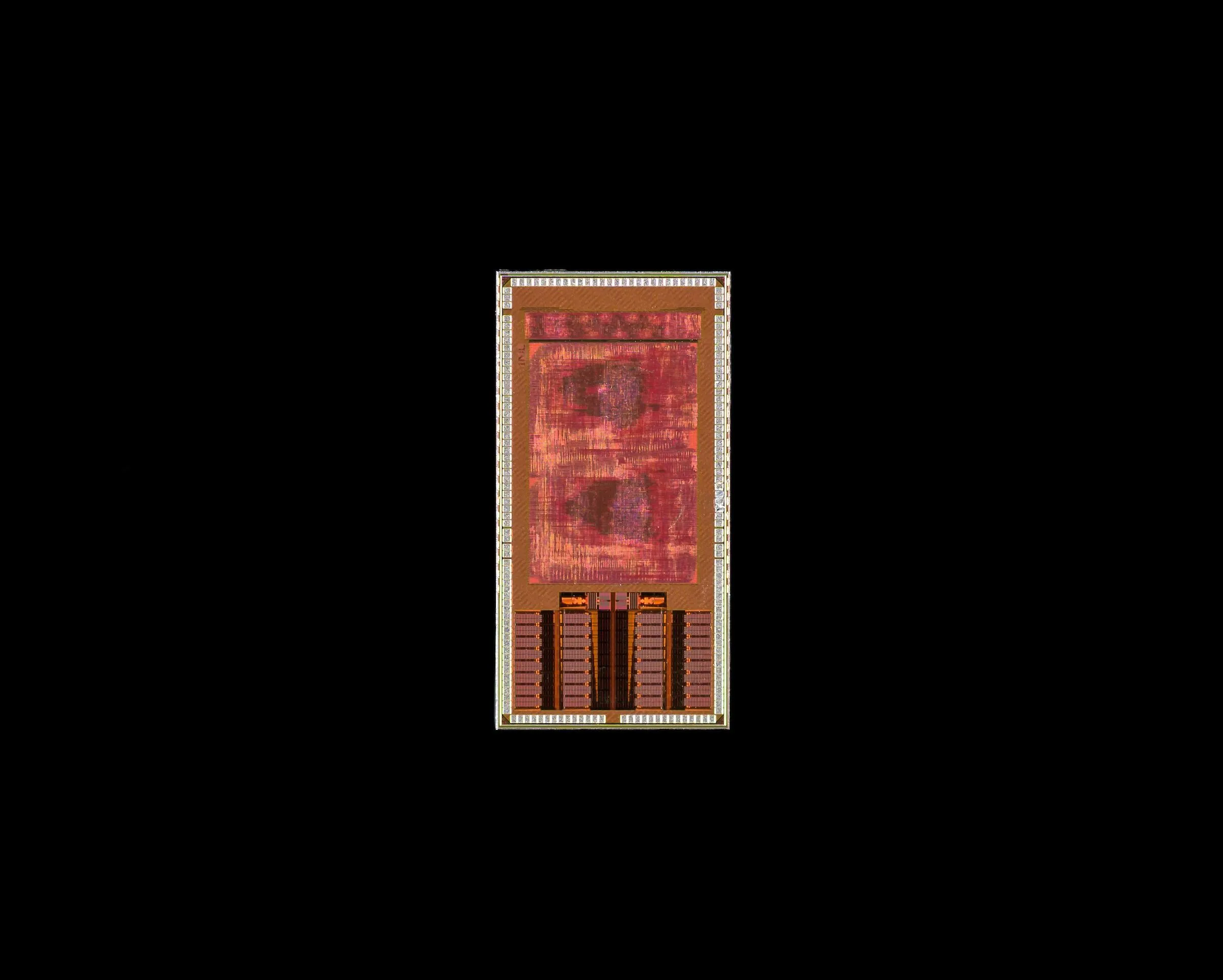
The LogSync chip, measuring approximately 4x2 mm
The technology could extend beyond psychiatric applications. LogSync's network-biomarker decoding framework may be adapted for adaptive DBS in Parkinson's disease, closed-loop noninvasive brain stimulation, focused-ultrasound neuromodulation, and other emerging neural interface technologies.
The laboratory is also advancing self-supervised learning approaches. Its ICML 2026 work explores neural feature learning across brain regions, channels, and time, potentially reducing reliance on predefined biomarkers. Related technologies are being advanced toward commercialization through Infera Neuro, an EPFL spin-off focused on bringing intelligent neuromodulation devices closer to clinical use.
By moving from single-site stimulation toward brain-network-level control, LogSync offers a low-power, network-aware architecture for next-generation closed-loop DBS, with potential implications for personalized neuromodulation and future treatments for complex neurological and psychiatric disorders.

