


Summary: An international research team from Tohoku University, the University of Utah, and Pacific Northwest National Laboratory has developed a palladium nanoparticle-based catalytic hydrogen sensor with abundant grain boundaries. The device operates without external heating across temperatures of 22–80°C and relative humidity levels of 0–90%, detecting hydrogen concentrations as low as 100 ppm even at 80°C and 90% humidity. The findings were published in Advanced Materials on October 23, 2026.
Hydrogen is a key component of the clean energy transition, but even small leaks can pose serious safety risks. Reliable hydrogen sensors are therefore essential throughout the production, storage, transportation, and utilization of hydrogen. One persistent challenge is humidity: water molecules can cover active sensing surfaces and compromise detection accuracy, particularly under high-temperature and high-humidity conditions. Conventional solutions often require external heaters to dry the sensor surface, increasing power consumption and device complexity.
The international research team has addressed this challenge through materials engineering. Its sensing layer consists of interconnected palladium nanoparticles with numerous grain boundaries, the microscopic interfaces between adjacent crystalline grains. Experiments revealed that these grain boundaries are not merely structural defects but play a critical role in reducing humidity interference.
The sensor can detect hydrogen across temperatures of 22–80°C and relative humidity levels of 0–90%. Even at 80°C and 90% relative humidity, it can detect hydrogen concentrations as low as 100 ppm, despite the overwhelming presence of water vapor. The device also demonstrated good selectivity against 21 potential interfering gases, reproducible performance over 100 consecutive sensing cycles, and stable operation throughout a 125-day testing period. Under demanding conditions, it also met relevant humidity-response requirements of the ISO 26142 standard.
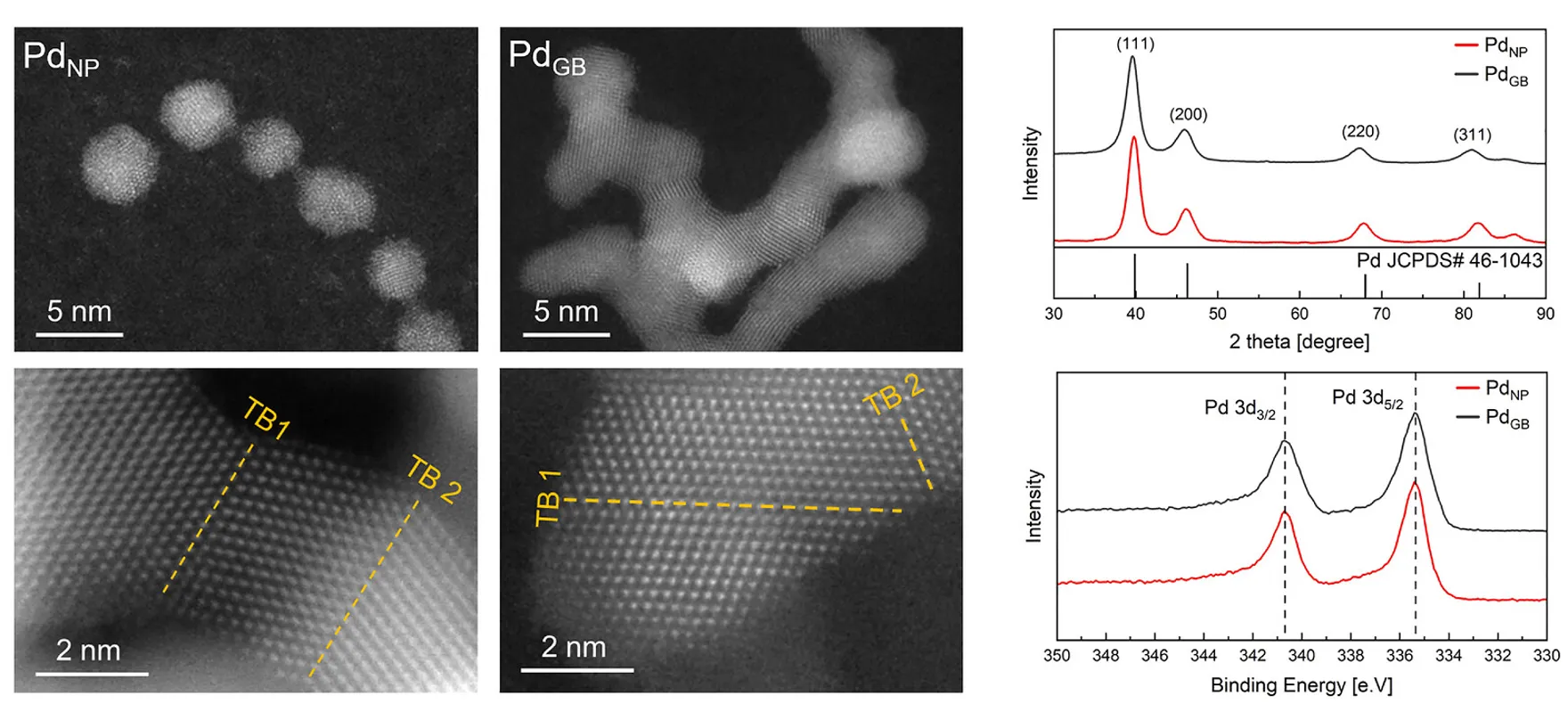
Electron microscopy reveals interconnected palladium nanoparticles that
create numerous interfaces between neighboring crystals. ©Yang et al.
The research team combined experiments tracking structural changes and water desorption with molecular dynamics simulations and first-principles calculations to explain the underlying mechanism. Hao Li, Distinguished Professor at Tohoku University's WPI-AIMR, said: "We found that grain boundaries help hydrogen enter palladium and rapidly form palladium hydride, even when the surface is wet." Palladium hydride interacts relatively weakly with water, allowing catalytic sites to remain accessible for hydrogen oxidation reactions and generate measurable sensing signals. The interaction among grain boundaries, hydride formation, and water adsorption explains why the material maintains its detection capability under conditions that typically impair conventional catalytic sensors.
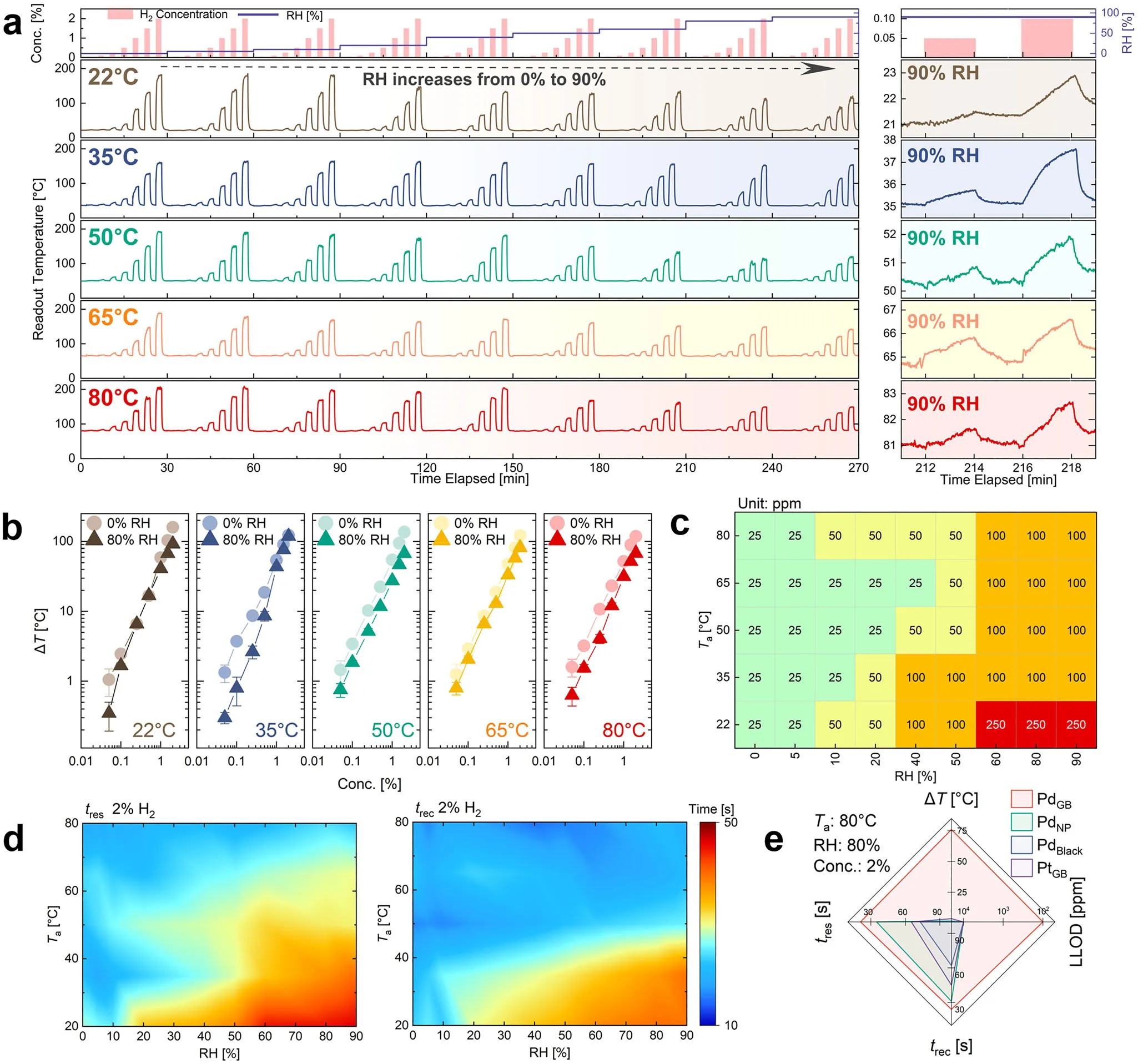
The palladium-based sensor detects hydrogen across a wide range of temperatures
and humidity levels, including exceptionally humid air. ©Yang et al.
The team also integrated a machine learning model into a portable hydrogen sensor prototype. By compensating for temperature and humidity variations, the system estimated hydrogen concentrations with errors of less than 5% during tests under randomized environmental conditions.
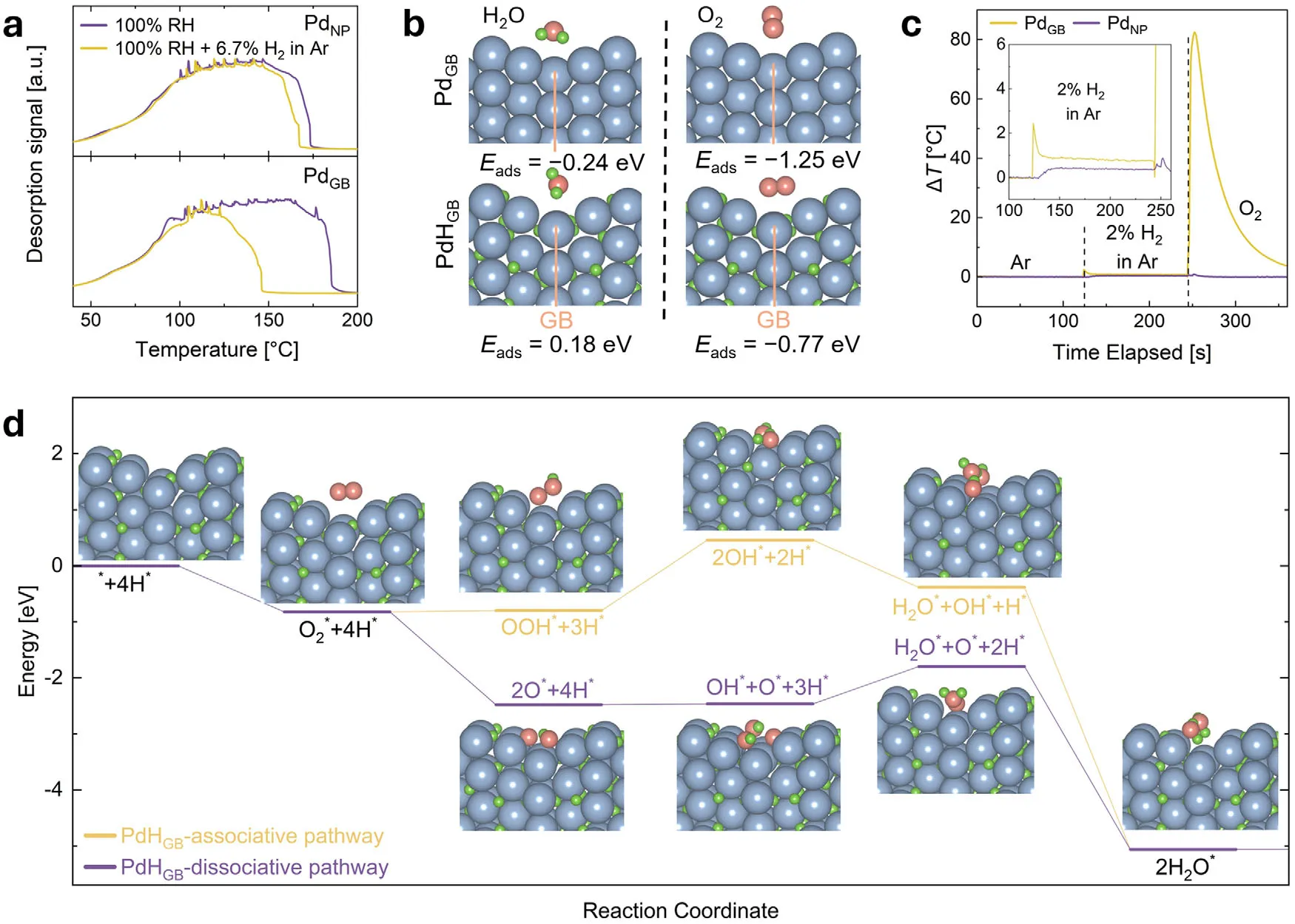
Experiments and atomic-scale calculations explain how palladium hydride formation reduces
interference from water and supports hydrogen detection. ©Yang et al.
Beyond the device's performance, the study highlights the potential of grain boundary engineering, which treats interfaces between crystalline grains as functional structures that can be deliberately designed. This approach could open a new pathway for reliable hydrogen leak detection in industrial facilities and future hydrogen energy infrastructure.

