How to Build an Exoskeleton Robot
Hailed as the "steel armor for human augmentation", exoskeleton robots must surmount four major technical hurdles—mechanics, sensing, algorithms, and motion prediction—before they can evolve from blueprint concepts into tangible products.
Mechanics: The "Joint Code" of the Steel Skeleton
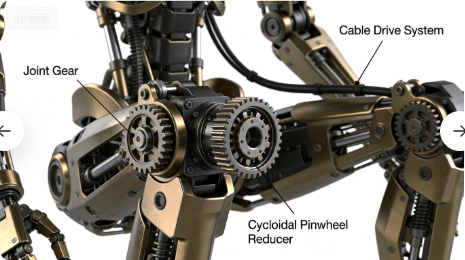
The basic framework needs to be assembled with the precision of building blocks. Joints depend on high-precision components such as cycloidal pinwheel reducers, coupled with flexible cable drive systems to realize directional force transmission. The drive circuit precisely regulates the motor by virtue of Field-Oriented Control (FOC) technology, and in combination with the embedded programming of the STM32 main control board, it enables the steel limbs to respond flexibly to commands.
Sensing: The "Neural Bridge" Between Human and Machine
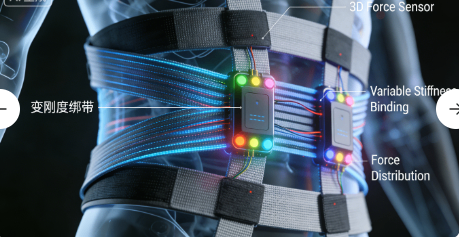
Three-dimensional force sensors real-time calculate complex force conditions in space, such as pushing, pulling, twisting and dragging, while friction compensation sensors eliminate interference caused by mechanical wear. The wearable system adopts a variable-stiffness binding structure, which automatically tightens under stress and releases flexibly when relaxed, striking a balance between support performance and wearing comfort.
Algorithms: The "Intelligent Brain" for Human-Robot Collaboration
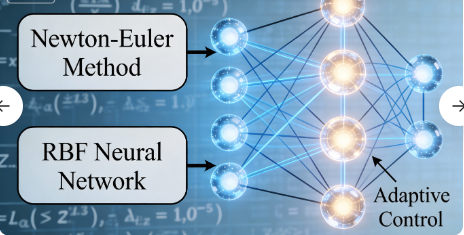
Traditional dynamic models derive human-robot interaction equations via the Newton-Euler method, translating the force interplay between the human body and steel machinery into rigorous mathematical language. The control layer relies on Radial Basis Function (RBF) neural networks for adaptive adjustment, allowing the exoskeleton to precisely adapt to different body types and various movement patterns, just like a seasoned driver.
Motion Prediction: The "Soul Prediction" for Human-Robot Integration
Electromyographic signals capture subtle muscle movements prior to exertion, inertial data from the Inertial Measurement Unit (IMU) predicts the body's motion trends, and deep learning models classify and identify movement intentions half a second in advance—actions like lifting legs and bending waists are all anticipated, truly achieving "mind control".

Every step, from reducer selection to the iterative upgrading of control algorithms, is a critical choice on the technical roadmap. Only by daring to experiment and excelling at innovation can this steel armor transition from the laboratory to real-world application scenarios.