What Is a Servo Motor? Working Principle and Analysis
Servo motors are widely used in robotics, manufacturing equipment, and automobiles, among many other fields.
At first glance, their working principle may seem complex. This article will systematically explain the basic working principle, structure, and applications of servo motors in a step-by-step manner.
|| Servo Motor Working Principle
What is a Servo Motor?
A servo motor is generally a type of electric motor used to perform position control tasks.
Its characteristic is its ability to control rotation angle and speed with very high precision, thanks to the special control system of the servo motor.
The basic workflow of a servo motor will be explained below.
Basic Workflow
The operation of a servo motor relies on a "control loop" or "feedback loop" system.
This system mainly includes the following four steps:
·1. Command Input: In this stage, the system is given a command specifying "what operation is desired." For example, a command can be given to rotate the motor to a specific angle.
·2. Control: Based on the input command, the control algorithm determines how the motor should operate.
·3. Output: Execute the action determined by the control unit. The motor performs actual physical operation in this step.
·4. Feedback: The actual position and speed of the motor are measured to determine if they match the command requirements. This information is fed back to the next control unit, which adjusts accordingly.
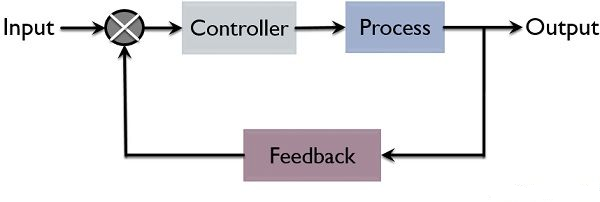
Through this feedback loop's high-speed and continuous operation, the servo motor achieves high-precision, high-response operation.
|| Servo Motor Composition
The basic composition of a servo motor is explained below.
Basic Composition
A servo motor mainly consists of the following four main components:
·1. Motor Body: As the core of the servo motor, the motor body bears the important responsibility of converting input electrical energy into mechanical motion. The type of motor, such as a DC or AC motor, and its characteristics (torque, speed, etc.) during the electrical-to-mechanical-motion conversion process, all significantly affect the final control performance of the servo motor.
·2. Feedback Sensor: The feedback sensor is used to detect the motor's current position and speed. This information is used to compare the system's expected operating state with the motor's actual operating state. Feedback sensors include different types of products such as photoelectric encoders and rotary transformers.
·3. Control Circuit: The control circuit is responsible for information exchange between the motor body and the feedback sensor, generating control commands, and providing appropriate electrical drive to the motor. This part determines the accuracy and responsiveness of the motor control.
·4. Power Supply: The power supply is responsible for providing the necessary power for the motor's operation. Servo motors typically have stringent requirements for high-precision control, and the quality and stability of the power supply are critical factors.
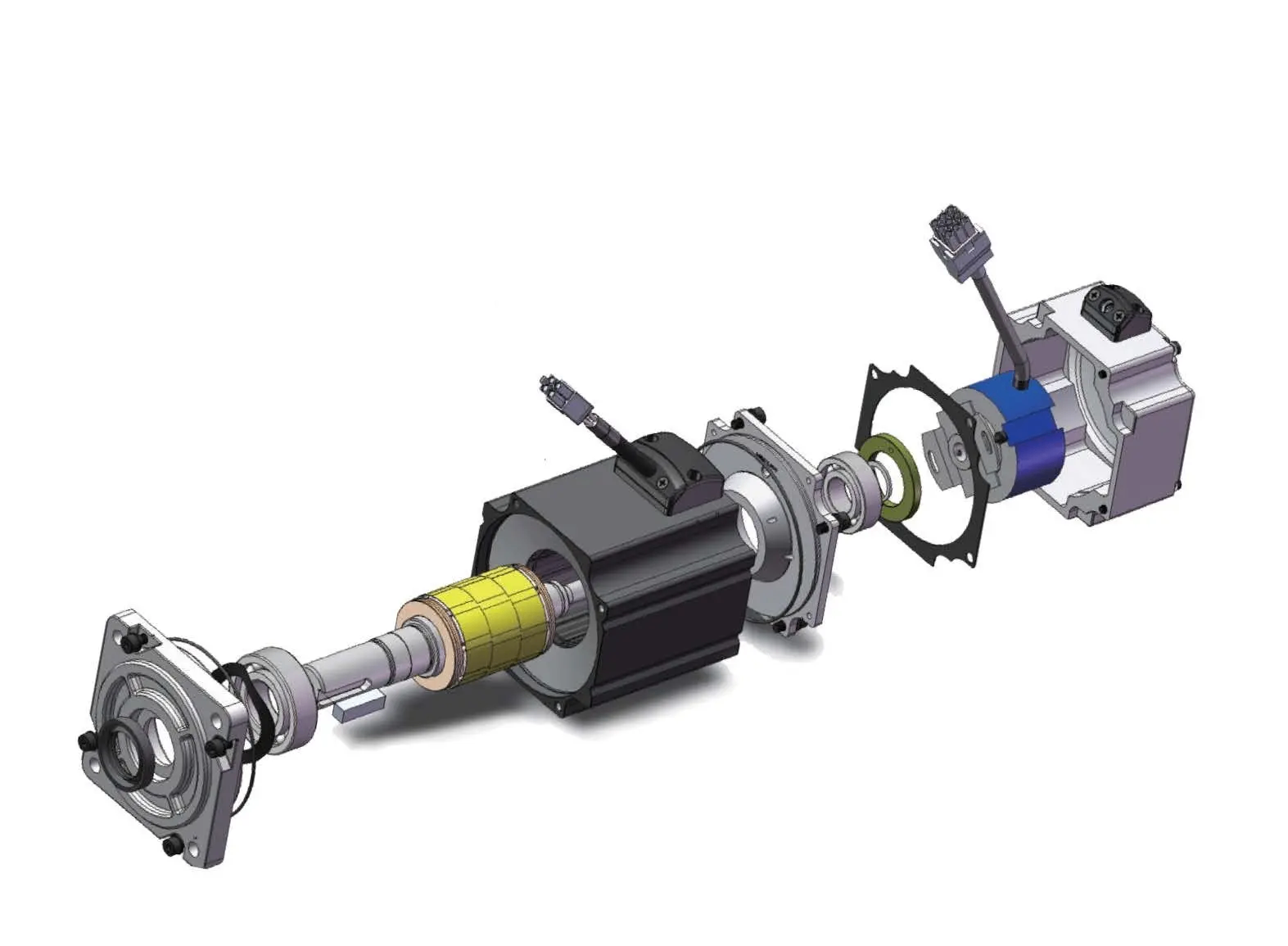
A servo motor consists of these elements that support its high-precision control performance. The motor body, feedback sensor, control circuit, and power supply work together to enable the servo motor to achieve its superior performance. A deep understanding of the characteristics and functions of these components is crucial for the more efficient design and application of servo motor control systems.
|| Applications of Servo Motors
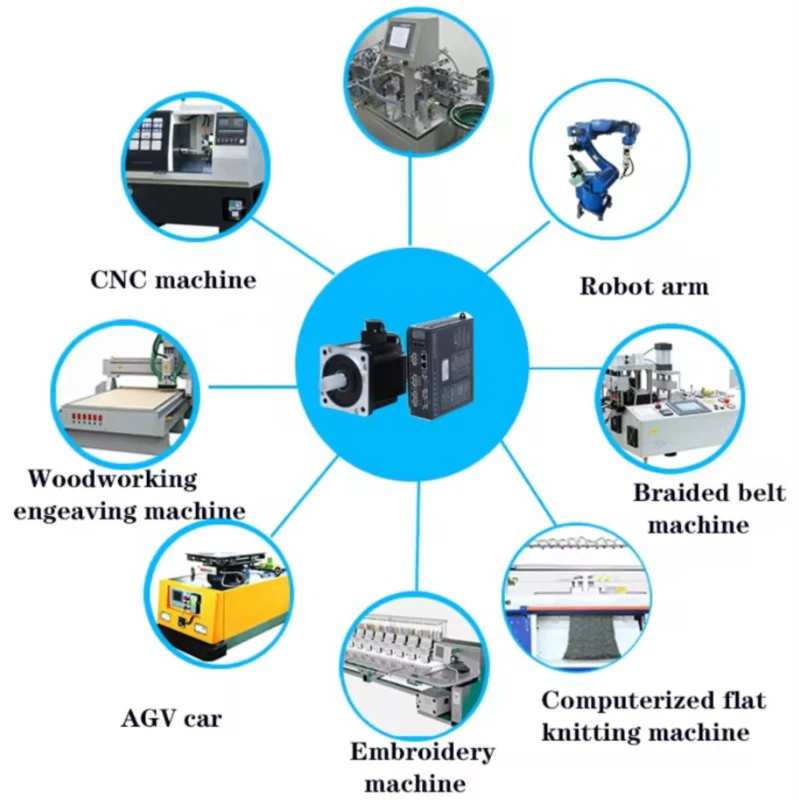
Servo motors, with their precise control functions and superior performance, are widely used in numerous industries.
Below are some typical application scenarios for servo motors.
Industrial Production and Automation
Most industrial machinery typically has very high requirements for operational accuracy and reliability, and servo motors, with their precise positioning capabilities and high torque, play a vital role in this process.
Taking Computer Numerical Control (CNC) machine tools as an example, servo motors can accurately move cutting tools to the target position, thereby enabling the machining of complex and precise shapes.
Robotics Technology
Robotics technology relies heavily on servo motors. In many applications such as industrial robots, autonomous vehicles, drones, and robotic surgical equipment, the precise control of servo motors plays an indispensable role.
|| Control Methods and Circuits
Servo motor control methods include position control, speed control, and torque control. To achieve these controls, dedicated control circuits are required. The control circuits generate control signals to drive the motor, while simultaneously receiving feedback information from the motor and updating the control signals accordingly. Furthermore, with the help of a PLC (Programmable Logic Controller), multiple motors can be controlled simultaneously, enabling more complex motor control.